Author Archives: Abalieno

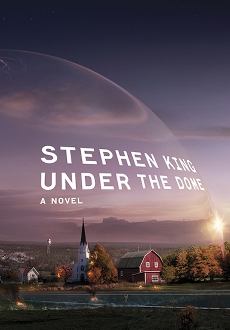
It seems the more book reviews I try to write the harder they get, but I wanted to try anyway. I read this book in slightly more than three weeks, 1070 pages. I’m not a fast reader so it’s quite an achievement for me. I didn’t even expect to read it whole. As I’m used to do, I usually just read the beginning, and, when satisfied, put it away to read fully later on. Especially because I had the Infinite Jest task at hand and I didn’t want to risk of losing track on that. Instead I started reading, curiosity pushed me past page 100 and at that point I just wanted to see what was next and there was no return.

This book is a real page-turner. With incredible constancy I kept reading way past my own target for that day. I told myself I’d finish the chapter, then read the first lines of the following to see where it was going next and continued for another thirty pages. It’s superbly readable. It’s also worth pointing out that I’m not exactly a Stephen King fan. I only read “IT” and that was many, many years ago. So I don’t know how this book compares to his others, or if he’s back to form, or whatever. On the internet there are mixed opinions. What I say is that this book is written really well. Something I didn’t expect.

I should make a distinction between the “what” and the “how”. Between the craft and the material. Not unlike the review I was trying to write about A Game of Thrones, it’s the craft that shines here. The book is masterfully driven and always under control. In books with a so high page count and large cast of characters there are always a number of diversions. I remember from IT that King loved to give his town its own story, and explore it fully, with patience. Plenty of stories to tell, interesting characters that demand their spotlight time. That is all pleasant to an extent, but it’s the opposite of what happens here. The story in this book goes straight on. No looking back, no diversions, no flashbacks taking the story on a different level. The whole thing stays focused, both time-wise and location-wise. It moves linearly onward. The spotlight lights on Chester’s Mill and its residents, never ever leaves them in time or place. This is also the major strength of this novel: it’s all incredibly focused, tight and moving on with unrelenting pace. Only by being very picky I could say that there are two slight passages, one about the middle of the book, another before the end, where the careful domino set-up takes a bit too much exposition time, but this is more due to subtraction than bloat. Things need moving and they are a bit downplayed in respect to others so that the story doesn’t go out of focus.

The books gives you no pauses even in the way it’s structured. There are bigger titled sections that chunk the story and give it a broad theme, but then the story is written in quick chapters that keep the pages turning and turning fast. There are many characters and points of view, but they never go on their own unrelated tangent that may or may not converge later on. Every story thread and point of view is kept tight to the main story that goes through the book. You are never left longing in frustration for one side plot while the book jumps to a different point of view. When this happens what comes next is closely related to what you left, and when the writer deliberately abruptly breaks the chapter is to cleverly build suspense that is then satisfied shortly after. The book is generous and doesn’t pretend more patience than what it deserves.

What I described is what defines this book. The tight focus and pacing. The only two moments where the action appears to relax coincide with the two I pointed out above, preceding the two major events in the book. Everything else stays on track, moving straight and never slowing down. The book looks huge but it reads like a fresh breeze. It goes down easy and never at the expense of quality. It’s very well handled. One could probably make a kind of book-reality sync and match the way time passes in the book with real time. It takes 1070 pages to tell linearly what happens in a week. Day after day. With absolutely no dull moments.

Now let’s talk about “the dome”. Everyone likely knows what the book is about whether they read it or not. The theme is what sells the book and the theme is that simple. This fancy barrier/dome comes down on a small town and this is the story of those caught within. Will they survive? Will they get out of the barrier? This is obviously a trick (the dome) so that the writer can focus on the real theme: the stories of those characters. Their lives, their emotions. What people do under stress, what they become. This is a story of people. You are meant to connect with the characters and live along with them this nightmare under the dome. Get in close contact with the best and worst people can become. The way the put on and off masks. But one also wonders if this “dome” stays just as a trick, external to the book, a writing device, unexplained, untouched, inviolable, unknowable. A mere artifice that enables the writer to have this huge magnifying lens on the characters, and watch closely. Set them on fire, maybe. Watch them run around with nowhere to go, trapped in there. Which comes to be the cipher of the book itself. I’ll say that, surprisingly, King tackles the theme of the dome itself (even if for 1050 pages the focus is somewhere else, and it is where the book works best). You won’t be left with a mystery and the whole thing will be explained and understood by the end. It’s not really the point, since the book is about what happens under the dome way more than about what the dome is, but the book is generous on this aspect and you will be delivered a decent explanation that wraps everything up neatly. If you were wondering.

Which leads me to talk whether it lives or not up to the task. While I was reading and turning the pages I just loved it, I already said, but I also wondered if the destination was worth it (payoff?) and if my opinion could change once I got to the very end. It’s like if what you read is at stake, because it all seems to have a point a go somewhere. Is this “somewhere” a worthy destination? Well, readers will likely be pleased and deluded. Depending a lot on what you expect. From my point of view the journey is wonderful and engaging, the destination satisfying, but nothing more than that. The moral theme that plays by the end seems on a different note than the rest of the book, and, once again, it’s the rest that works better. The end of the book is a valley after a peak, and it can disappoint. Everything is wrapped up neatly and yet feels like something is missing. I also think that the book works better on its meta-fictional explanation than in its fictional one (because, again, there’s a real end that fills all mysteries).

What readers may feel like a real problem can be summarized with this: everything is as it appears to be. This constantly through the book. The craft is far superior to the material at hand. The story works so great, delivers moment of real suspense, always keeps you on your toes. But it’s also kind of predictable and unsurprising. There are various moments in the book where guesses about mysteries are tossed around, and almost always things are exactly as they appeared to be with the delivery of the very first hint. There’s almost nothing truly spicy to unveil, and yet the book haunts you and makes you read and read on as if your life depended on it. What it takes is some awesome “craft”. King just executes brilliantly (and writes here really well) ideas that on their own wouldn’t hold the book. This also because he can truly realize characters and make them live out the page. None really original, but executed to perfection, a pleasure to read.

The book also tries to kick you in the nuts plenty of times. Lots of deaths in this book and for me some of them are quite hard to get through. A few times I wondered why I was doing this to myself and read a book so harsh. There’s some masochism involved. It’s not an horror, and this makes it harder to bear because the way it starts and moves on (at least 1/3 through) is hyper-realistic. There are no real supernatural elements that may downplay and estrange from what happens, so it’s harder to establish some distance. But, thankfully, the writing helps. King is able to balance things and sometimes he can produce something comical (yet authentic) out of an awful situation. It’s not a book that just kicks and slaps. It’s also plenty fun.

The writing is not my favorite style even if I appreciated it. The writer weighs in explicitly. At various times he’s there beside you, right in the novel, speaking with his own voice, setting things up. I find this way of writing somewhat “untruthful”. Something manneristic and showy. I also noticed that a few times different characters think metaphorically about their situation, and I thought that this was more a typical habit belonging to a writer than what someone usually does, especially since people don’t really have a good grasp of what situation they are in and their metaphorical thoughts in the book are too good and neat to be plausible. I don’t like much this tangible and direct presence and influence of the writer himself in the book, yet it didn’t get in the way and I was still able to enjoy the book.

This is what it is. The story of the people who live in a town, the best, the worst that comes out of them. But then, even more, what turns the town from fine to armageddon in just four days is internal. Triggered but not made by the dome. The dome works more as a reveal than the real immediate problem. People project problems on the dome, but it’s their own problems to surface and take them by the throat. The pace is unrelenting, the focus always tight. An agile and thrilling read. There are various hints that set the story somewhere in the close future. Obama is still president. There’s even a kind of queer endorsement of his health care plan. In the book it is already approved and working but the context seems to suggest that, no matter of good intentions, the Americans will find a way to screw it up. The plot and characters are not overly original or surprising, and King uses tricks to create suspense that have been tried and honed a million of times across different media. But they still work. Everything is splendidly executed even if not entirely new, and reading is a pleasure.

I agree with what Dan Simmons said about this book. It’s a breath of fresh air that you can’t usually expect from a so prolific writer who’s probably already squeezed out all the creative juice. Instead there’s nothing tired about it, nothing perfunctory or superfluous. You can feel the enthusiasm and drive that went in the story and characters. It all seems to come with no effort. To balance all this it also shows a perfect control of structure and pacing and perfect execution all around. I don’t know if it’s the best King, but it’s lively and fun.

There are a couple of big moral themes at play, but I think the most fitting is the dismay about how far and wrong things can go before you can fully realize it. It’s an entirely political concept and it’s the true protagonist of the novel. Unsettling because we are all under the dome, and it doesn’t end by just closing the book.

P.S.
If you are interested in the meta explanation I’ve hinted I can suggest to follow this link.
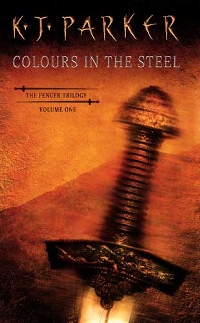
Instead of sticking to a series and read every volume before I move onto something else I try to cover as many authors I can, so that I can have a better idea of the fantasy genre as it is today. The mysterious K.J. Parker isn’t one who gets as much attention as other, more popular writers, but in comments and reviews I read she (we assume it’s a she, but the true identity is unknown and name used just an invention, being mysterious like that) has a very good reputation and more than once caught my attention. Especially when Pat posted an excerpt from a recent book that I thought was brilliant. I made a mental note to buy that book when it came out (a standalone), but sooner than that I read some more comment of an earlier trilogy she wrote (The Fencer Trilogy) whose first book was a detailed and realistic description of a siege to a city, down to the smallest details.
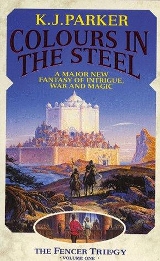
The siege and a lot more I found in the 500 pages of the book. I’m not one to have prejudices, but thinking that the writer may be a woman couldn’t be more misleading. There’s a constant in her writing that I read is common to all her books, and it is the cynicism. This is a story that is always told from a detached point of view. Surgical. It’s like a screen that filters and separates the one who tells the story and what goes on in it. You are, in reading and sharing the seat occupied by the writer, an observer. This is a displacement that is always present. But the cold, detached point of view is perfectly balanced and matched with a sense of humor that makes the writing always interesting.

It’s easy to be mislead by the premises. Along with the cynicism there’s also an obsession with the technical details. At times the book stops to be a story and becomes a technical manual about how to build siege engines and other tools of war. It explains the materials, how they are chosen, how they are treated, all the steps that are required up to the final output. Then explains you how to use them. Whether it is about fencing or how to properly plan the siege to a mythical high-walled city that is the theme of this book. One would assume that a read couldn’t be more boring and I imagine you thinking right now of reading this book and falling asleep after two paragraphs. Instead it’s surprisingly compelling and it’s all merit of the writing itself.

As odd it may sound, this is a character-driven book. None of the characters stand out as memorable. There isn’t any way to quickly describe them and the reason is that they aren’t stereotypes. This is far from a typical fantasy novel and more alike to an historical fiction that isn’t historical simply because the setting isn’t real. But it is real in every element that forms it. An imagined story whose aspects are meticulously researched. The same treatment that goes in the setting goes in the characters. We don’t have key-roles or striking, recognizable characters. We have normal people, defined even here with attention to the detail. They are part of their world down to their mentality. If I had to make an example I’d use Richard Morgan. If in Richard Morgan you have a fantasy written through a modern eye (like we see in the dialogues), here we observe characters that truly live in the book and are shaped by what’s around them. With plenty of natural blind spots.

The execution is excellent. You can’t avoid to admire what the writer did here. The way she can transform potentially boring parts in pages that you can’t stop reading. What is up-to-date is the point of view, the writing itself and cleverness, even wisdom, disillusion. Cynicism again. Black humor. Sometime you feel like you are observing one wicked experiment where guinea pigs struggle and die in the most cynical ways. That detachment between what we know as people of our time, opposed to a medieval world with all its simplicities. You can see what is coming and it produces a wicked sense of humor since you aren’t there, you are observing how people are stupid, or just victims of their time. Victims of simple beliefs. Or just victims in general because no one can really control anything.

There are no winners. There’s also a kind of predestination that is bound with the idea of progress. The medieval world is allegory of “change”. Of science versus beliefs. One day before the age of enlightenment. Parker here is the innate, perfect writer for the task. In the same way there’s this dualism of modernism and pre-modernism, the writer incarnates the perfect match and dualism of the soulless meticulous technical detail and the sense of humor and originality that ties everything together. Art and tech. Enhanced with an air of magic that exist in the book, but that is another allegory of itself. Not a showy, controllable magic. Not fireballs, invisibility, flight or other useful uses. Not devices and desires. But an hopeless fight against destiny and its whims. Trapped guinea pigs that can only believe the illusion in front of the eyes and that are fated to be victims. Humorous tragedies of life that you enjoy only till you understand that the huge distance between you and them is an illusion too.

Don’t expect from this book a story with heroes, spectacular battles or even complex political intrigue or power struggle. Don’t expect escapism or identification. This book needs brain and is great when you admire its cleverness in all its aspects. It has none of the trappings that appeal to younger readers, none of the immediate appeal and satisfaction. It is infinitely more subtle but also more satisfying. In any case this is an original voice that is precious in the genre. The flaw is that she wrote many books and, while investigating many different aspects and improving in what she does best, they all play with similar tones. But if you want to explore human genius and despair at once, this is the best journey.

P.S.
First volume in a trilogy, but the ending is so satisfying that you can take this as a standalone. The choice to move on the next books is on the reader more than forced by the plot.

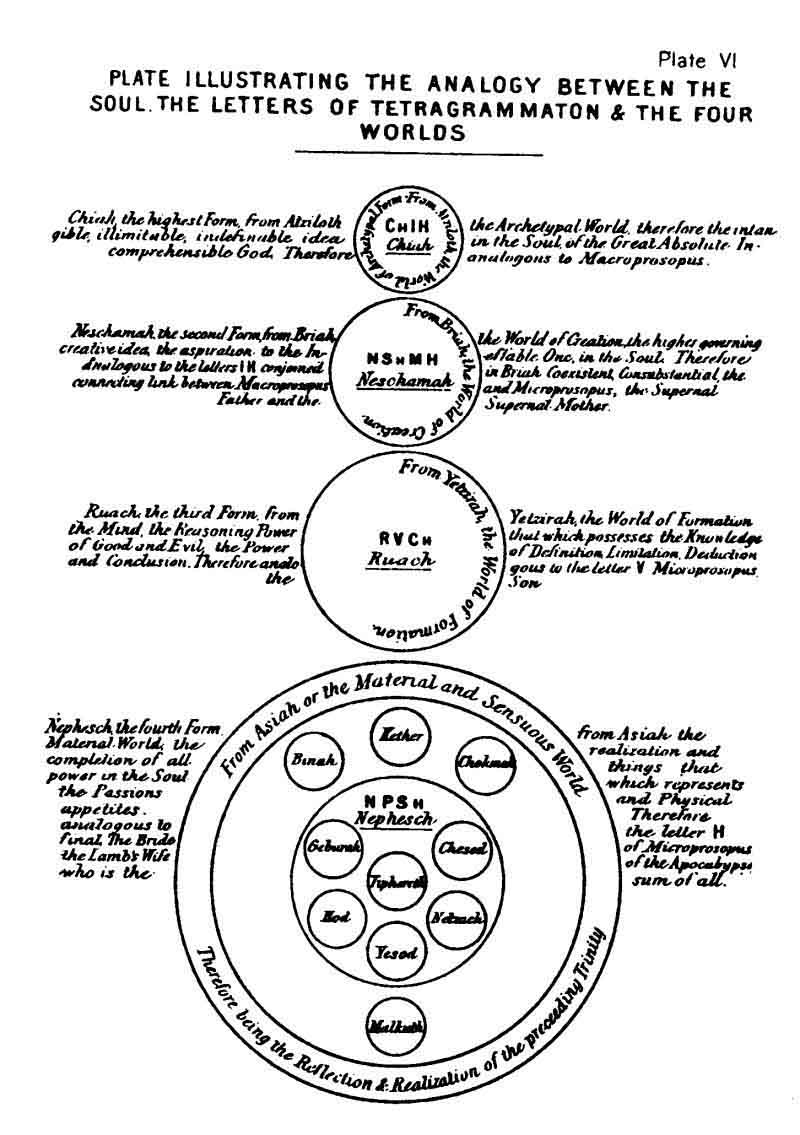
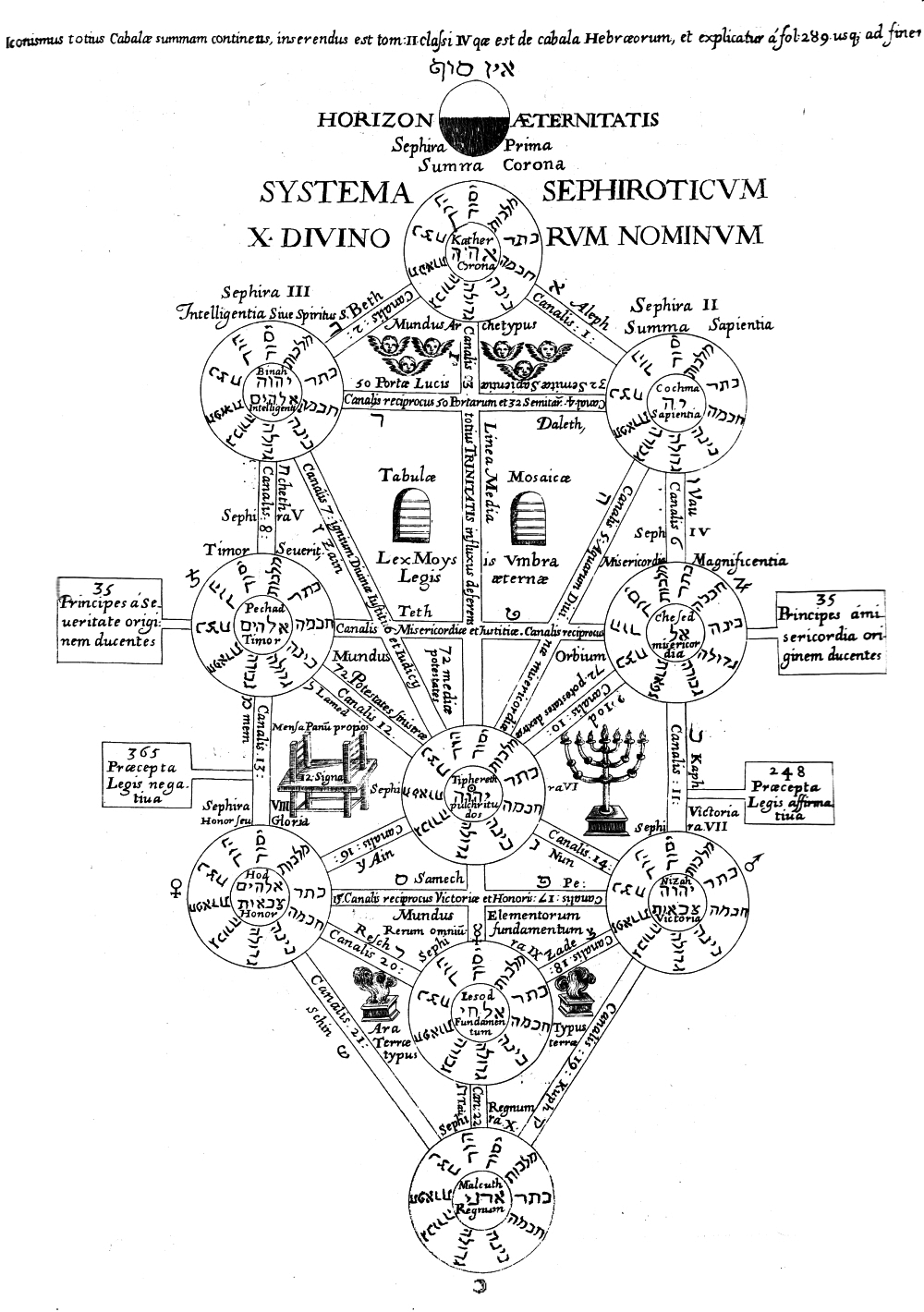
Yep, that’s what was the chart below from.

It’s a while I’ve been reading about hermeticism, then last week I watch the second episode of Fullmetal Alchemist and at some point they show an image of the tree of life (1, 2, 3). I decided that I wanted to know the meaning of it. Not just a general sense about what it is about, but all the symbols and writings on it. So, starting from the wikipedia, I went looking for all kinds of infos I could find, but as always on the internet, it’s easy to get lost.

The first intent was to look into bookshops to find the most complete and deep book about Kabbalah I could find. I’m not interested on the “practical” rituals and meditations that are popular nowadays, nor the most religious aspects. I wanted to read about the myths, the symbols, their meaning. I wanted to recognize words and symbol, know what they mean.

The problem is that on amazon and other book shops the majority of the material seems composed of short books (150-200 pages) that deal with some specific aspects. I wanted instead some kind of full guide that I could use as a reference every time I read about something, something exhaustive. I even tried asking on the forums to see if someone could give me hints, and discovered that it is quite popular. Many recommend books by Gershom Scholem (such as “Major Trends in Jewish Mysticism”) but I was worried that these academic works only gave historical notions but nothing really about the Kaballah itself, its meaning and mythology.

So I started looking for less orthodox books, like the tradition of the Golden Dawn. It seems that western occultism is a messy mixture of Kabbalah (the spiritual aspects) and Medieval traditions (the magical and ritualistic aspects). If you want to look for “authenticity” then the Golden Dawn is the worst starting point as possible. They put everything together and then interpret and transform things their own way. Too much made-up stuff and not enough with some kind of value. But for me they could be useful, I was just looking for the mythology and the Golden Dawn filtered all the deep religious aspects only to save the mystical and mythical ones. Problem is that only 1/5 of the books I could find was about “theory”, with the rest filled with weird magical rites and celebrations, magic formulas etc… Since I’m not going to try to evoke Cthulhu all those pages wasted on rituals were useless to me. I’m interested in the meaning of them, and what they are based on, not to know a list of instructions to do this and that.

Thanks to the internet I could delve into the books and make a better choice before I purchase something. From the occultist side I found a huge torrent that has a majority of the texts I was looking for (Israel Regardie, Waite, Eliphas Levi, Crowley and a bunch of other books on the Kabbalah). Without wasting money now I can see if there’s something in there that isn’t bullshit and is worth purchasing.

But it’s from the more authentic side that I found the most interesting material. To begin with I was looking at this textbook. It seemed big enough to be complete, then I discovered that the whole book was available through that “google preview” button. Not just a few pages, all 800+ of them. If you quickly scroll to the last pages and then move up, you can find a number of insane charts like the one I copied below. That was some interesting and fascinating stuff. The more cryptic, the more curious and intrigued I am. The same way I wanted to understand the tree of life, now I wanted to understand those charts.

Later I discover that the book is published by an association in Israel. Through their site their WHOLE literary production is available for free. Included the whole 800+ pages textbook with the crazy diagram available as a pdf download. Hooray! That is more material that I could ever hope to find. And it’s not all. This association gives free online courses. There are free downloads of the videos of the lesson in Hebrew, that are then translated in different languages, along all the material that you are supposed to use, like other books and manuals. Moreover, all the 10.000 video lessons they gave up to this point are archived and available again as free download.

The new course started yesterday and you could skip registering just by knowing the right link.

I have all I need (and more), now I only have to find the time :)

Now, can you possibly guess what is this about? Hint: it was (only partially) triggered by watching an episode of Fullmetal Alchemist. Three days of flippant internet surfing lead to that.

And no, it’s not an alien periodic table of elements.

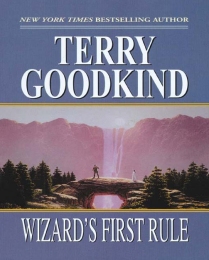
My reading pile is so high and filled with awesome that one wonders why I waste time reading Goodkind, especially considering I’m a slow (but steady) reader that has yet a vast ground to cover before feeling satiated about what the genre has to offer. The reason is simply curiosity. Some writers are loved everywhere, some writers are niche, some bring controversy. In the blogs and forums I read Goodkind isn’t just considered an example of the worst, but also a receptacle of laughter and continuous mocking. The books as its fans. I read this book in parallel with Memories of Ice and The Colour in the Steel of KJ Parker. Quite different stuff in style and intent, meant to be, so that I could gleam better what makes all these writers different. Since I re-started reading fantasy and sci-fi, about a year and half ago, I tried to pick representative writers and books, vastly different one from the other. I do a lot of “research” (meaning reading plenty of reviews online and forum threads) before buying a book and, no matter what I plan, at the end I start reading the one that makes me more curious. In this case it felt a perfect companion (like their opposite) to the books I was reading, and I was curious to know how bad it was to deserve all that negative noise, and yet why it was also hugely successful with the larger public. The goal was to find a convincing answer to both questions.
I wasn’t even sure if I really wanted to stick with it from the first to the last page, I just wanted a sample. The fact that I arrived to the end is already a sign that I didn’t find it so horrid. Quite a page turner in fact. I’m not saying that I couldn’t put it down, but I had an easy time with it, more than with other, better books, and found myself reading further than the point I had decided to reach for that day. This due to a well-planned structure. Every chapter serves a particular purpose in a way similar to Jordan’s style, and every one chapter ends in a way that makes you curious about what happens next. Well balanced in all its parts. There isn’t any high peak in quality or particularly boring point. Mostly even with the exception of the last 100 pages, where all tensions vanishes and the plot comes to an end in quite a ridiculous way. Those last 100 pages are quite dreadful.

The whole beginning of the book instead went rather well. In fact I was writing on the forums that I was having an easy time reading it and that I considered it a relatively well written “young adult” fantasy novel, with the inclusion of some gruesome scenes. Well, that was before reaching the part with the PoV of the dark side. At that point isn’t a matter of violence and gore that aren’t suitable for younger readers, but scenes intended to be excessive. The problem of this book is that it takes itself way, way too seriously. So while it was working quite well as an accessible, easygoing and pleasant fantasy novel, it felt as if Goodkind started to add explicit violence and nasty themes only so that the book would have been taken seriously. As if he was marking the point and make sure he was going to be considered “adult”. Wannabe adult, but quite childish in truth. Childish and perverted at the same time.

Later on this point of view changed because while the book indeed has contrasting elements, it all brings back to one unitary view that then corresponds to a simplification of Ayn Rand philosophy. He didn’t just make parallels with themes, but also tried to replicate the reason behind the writing. Ayn Rand doesn’t write realistic characters, she writes only conceptual representations. She uses characters as precise embodiments of a concept, using them to explain this concept. They are descriptions of an intent, didactic. Means for an idea she wants to pass on. In the same way Goodkind creates characters, including main ones, more like archetypes than multi-faceted, complex figures. Slightly less conventional and already seen, as the archetypes aren’t typical of fantasy, but Ayn Rand archetypes (“The Queen’s tax collectors came and took most of my crops, they barely left enough to feed my family”). Richard, the seeker, doesn’t just acquire special powers because he becomes the seeker, but he actually becomes the seeker because he is already one. He already is the natural manifestation of the archetype itself. So he is chosen for the role, as a consequence.

This is both the weakness and strength. It’s quite obvious: if you don’t like when a whole book is meant to shove down your throat some strong ideology, then you’ll come to hate this book, because there’s really nothing “natural” or spontaneously going. It’s all driven to “mean”, from the first to the last page. On the other hand it quite works because while Rand’s principle aren’t smoothly working when dealing with real life, here the setting is serviceable and partial enough to be consistent with its intent. Fiction gives you that power, you can filter what you want and make sure your ideas work flawlessly. The simplification of Rand that Goodkind makes here works quite well and drives the story in an intriguing way. I mean, I hope you aren’t one who starts arguing at a book, because there’s A LOT to argue, plenty of brow-rising parts, but overall it works and exposes well some central themes, like the manipulation of masses. Even the “Wizard’s First Rule” is well explained and meaningful in the book. Sometimes Ayn Rand works, in most cases when it corresponds to a simpler concept: pragmatism. The concept of “truth” simplified in the book often corresponds to pragmatism, or what is true bared of opinions. There are situations where people behave absurdly (like the mob of people going against Richard, Khalan and Zed at the beginning), but it’s still fun to read and find out how the various situations are resolved. Most of the book is built showing an impossible dead end, only to have the characters, Richard mostly, find a way out. Without too many tricks, in fact. Just a good use of the simplified principles and some slight deus ex machina to nudge things this way and that.

For most readers this layer of morals and philosophy will probably go above their head. It’s not even that central. Central is the narrow point of view on Kalan and Richard, their relationship. That’s the hook thrown at the readers. Even here the main protagonist is an handsome, yet naive boy who lives in a corner of the world without surprises. Quite a good and typical role for identification. The disclosure of the magical, mythical, foreign world happens through the eyes of this boy, so easier for the writer to gently introduce themes and details, because Richard knows just as much as the readers. Vehicle for experiencing and awe. Add an attractive, mysterious, even scary girl and you have already a recipe for win. At least a large public type of win. The PoV only rarely moves away from the central duo, so it’s quite “zoomed in” and intimate. Another strength is the heavy use of redundancy. This is not a book where you risk to miss details. If there’s something slightly important then be sure it is going to be repeated over and over, and then again. It’s already chewed food. But it works well in the style of a page turner, where your attention is on the characters and their adventures. That’s why I think in the end it works well and is quite fun to read, while on the other hand it juggles with some themes. There is the clash some people perceive and that may increase with the later books, where, I’m told, the preaching prevails on the adventure.

Later in this book there’s an endless part that deals with torture and imprisonment. At the beginning it felt like a reference to Jordan’s second book, where Egwene is captured near the end of the book, but in this case there’s an excess of violence that is marked over and over, and even a much stronger presence of SM themes. So much that it makes you wonder. Goodkind makes absolutely sure that all the devious practices are exclusive of the bad guys, so he can point and put the blame on them and their evilness, but you wonder if in truth he enjoys these perversions in the end. Considering the increasing presence of these elements in the other books, the suspect is legit.

The part also made me think to “The Real Story”, first book by Stephen Donaldson in the Gap series. In this case the rape scene and theme is used to warn readers. It’s definitely not a book for everyone. Compared to Goodkind’s heavy handing it’s almost lightweight, but it’s way more unsettling even if it’s dealt less bluntly. In this case too Goodkind’s approach is more juvenile. “I’m bad, but ultimately good”. Versus the rape in the Gap series: “I’m bad, but if you look better, just gray”. Perverse, miserable and mean as most human beings. Amoral, filled with greed. So I think it’s the realism that makes the Gap case unsettling, while it quite doesn’t work the same in Goodkind. The tale is spoiled. First because you know where it goes, you know there will be the happy end. Second because there’s no real “letting the plot loose”. Goodkind follows solid principles, he uses the book as a way to exemplify them, as a representative model. The moral is shoved down your throat because the book is an example of it. A mean for the end. The gap is more ruthless. You don’t really know where it is going, the characters are less predictable. The writer explores a character the way it is, not the way he ought to be. There’s a sense of uncertainty. In Goodkind it’s the opposite. You know how it ends, you are just waiting to discover what trick is being used to win, and by the end there’s even atonement, so everything is being forgiven and put under a positive light. Coming out clean.

In fact that part is so overdone that I started to make parallels not anymore with Jordan’s Egwene, but with Jesus. Richard goes trough a kind of experience that is not unlike “the passion”. Just in this case what drives him forth is not love for god (that would be quite a betrayal of Rand’s atheism), but love for his gal. So the love story goes on, raised to dramatic heights. Even though there’s plenty to dislike in this part, I read it, surprisingly, with interest. The way out of the situation was unclear and, despite the incessant repetition of the same situations, I continued to read and probably faster than the rest of the book. In fact once that part is passed the rest feels even anticlimactic and the tension goes suddenly down. But then you are at those 100 page before the end, so you go on.

Now my curiosity is mostly quenched by what I read and I doubt I’ll move soon to the second book. There’s a short excerpt at the end of the book that was interesting and different from the rest, so it’s still possible I continue even if I don’t plan to. Everyone out there says that the more the series goes on, the more the flaws stick out. Not exactly a deterrent as I can be more interested in controversy than adventure, the part that was quite successfully executed in this book. I know now how Goodkind exposed his side to attacks because of the weird and dubious mix of themes and the simplified, juvenile approach to them. At the same time I also understand why this series is so successful around the world. It’s accessible, has a good pacing and easy for identification. Then there’s Drama. And true love, heroism, friendship. Hell, there’s even an almost-sex scene surprisingly well written (the one at the Mud people, not the one later). Sex scenes are usually the low point in books, this one was the high one. Incredible.

I had a good time with the book. It worked perfectly as an interlude between the denser Erikson and KJ Parker.

Every book should be enjoyed for what it is and nothing more. This one isn’t THAT bad.

Updated:
Jun 2026 – Last of the First, Modesitt
Jan 2026 – The Red Wheel update
Nov 2025 – Ice, Jacek Dukaj & Tom’s Crossing, Danielewski (both >500k), all of Ruocchio
Oct 2025 – Sub-Majer’s Challenge, Modesitt + No Life Forsaken, Steven Erikson
Sep 2025 – Schattenfroh, Michael Lentz // “Miss MacIntosh, My Darling” Marguerite Young
Jun 2025 – The Wild Road, Michelle West
Jan 2025 – some updates to eastern classics at the bottom of the page
Dec 2024 – Stormlight 5, Sanderson
Nov 2024 – The Navigator’s Children, Tad Williams – Overcaptain, Modesitt
Oct 2004 – Michelle West, upcoming – Cherryh, Foreigner
June 2024 – more Tchaikovsky
May 2024 – Janny Wurts finale, Tad Williams’ Memory, Sorrow and Thorn (added the two smaller books)
Feb 2024 – Modesitt – all of Recluce // Abercrombie Age of Madness
Nov 2023 – Hamilton more precise counts Reality Dysfunction 385k > 372k, Neutronium Alchemist 393k > 378k, Naked God 452k > same
Oct 2023 – Michelle West
Jun 2023 – Esslemont, Forge of the High Mage
Sep 2022 – Solzhenitsyn, not fantasy but epic in all the wrong ways
July 2022 – Into the Narrowdark, Tad Williams
May 2022 – Jenn Lyons, complete
Jan 2022 – Jenn Lyons, A Chorus of Dragons
Dec 2021 – The Expanse, complete
Nov 2021 – Diana Gabaldon – Go Tell the Bees that I am Gone
July 2021 – Added Instrumentalities series by Glen Cook (sadly suspended after book 4) + David Hair Sunsurge Quartet complete
May 2021 – Erikson’s latest (is quite “short”)
December 2020 – Recalculated Hamilton’s The Naked God, since it didn’t seem likely after looking again at the physical book in my hands. Updated from the previous 469k down to the corrected 452k. Not a big change actually.
November 2020 – Rhythm of War, Sanderson
August 2020 – Gap Cycle, Donaldson
July 2020 – Upcoming Sanderson
12 January 2020 – 8th Expanse
Jun 2019 – Tad Williams & latest Esslemont
11 December 2018 – Anniversaries – Uwe Johnson
27 November 2018 – Martin’s Fire and Blood
05 February 2018 – Tchaikovsky + Peake + Expanse 7
29 November 2017 – Deadhouse Landing (definitive)
16 November 2017 – Oathbringer
29 October 2017 – Deadhouse Landing, Esslemont (approx)
21 October 2017 – The Expanse 6th
14 October 2017 – Janny Wurts Destiny’s Conflict & Sanderson

When this post was originally written I used it just to track an handful of authors, then I kept adding stuff along the years. There’s no real order to this list, it simply grew in a haphazard way. The selection of authors also simply follows my curiosity and nothing else. The numbers are approximate and should omit indexes, appendices and stuff not directly belonging to the text itself.

To have an idea of a standard pagecount you can use this model:
100k = 250 pages
200k = 500 pages
400k = 1000 pages
(it’s 400 words on a single page, on average. Which is both a good overall average of a default layout being generally used and an easy calculation too, even if the modern commercial trend is to reduce that number and majorly inflate the number of pages)

Lord of the Rings – J. R. R. Tolkien

The Fellowship of the Ring: 186k
The Two Towers: 154k
The Return of the King: 130k

Total: 470k

Wheel of Time – Robert Jordan

The Eye of the World: 301k
The Great Hunt: 261k
The Dragon Reborn: 244k
The Shadow Rising: 386k
The Fires of Heaven: 346k
Lord of Chaos: 395k
A Crown of Swords: 289k
The Path of Daggers: 223k
Winter’s Heart: 239k
Crossroads of Twilight: 265k
Knife of Dreams: 314k

Total: 3M 263k

New Spring: 121k

Brandon Sanderson takeover

The Gathering Storm: 296k
Towers of Midnight: 325k
A Memory of Light: 355k

Total global: 4M 360k

Stormlight Archives – Brandon Sanderson

The Way of Kings: 380k
Words of Radiance: 400k
(Edgedancer): 39k (bridging novella)
Oathbringer: 450k (Nov 2017)
Rhythm of War: 453k (Nov 2020)
Wind and Truth: 487k (fall 2024)

A Song of Ice And Fire – George R. R. Martin

Fire and Blood: 250k (not counted in total)

A Game of Thrones: 295k
A Clash of Kings: 322k
A Storm of Swords: 419k
A Feast for Crows: 298k
A Dance with Dragons: 415k

Total: 1M 749k

Malazan Cycle – Steven Erikson & Ian C. Esslemont

Malazan Book of the Fallen – Steven Erikson

Gardens of the Moon: 204k
Deadhouse Gates: 267k
Memories of Ice: 355k
House of Chains: 302k
Midnight Tides: 267k
The Bonehunters: 358k
Reaper’s Gale: 382k
Toll the Hounds: 389k
Dust of Dreams: 370k
The Crippled God: 380k

Total: 3M 274k

Kharkanas Trilogy – Steven Erikson

Forge of Darkness: 293k
Fall of Light: 356k
A Walk in Shadow: ? (stalled & postponed)

Sequel Trilogy (split into four)

The God is not Willing: 190k
No Life Forsaken: 148k

Bauchelain & Korbal Broach novellas – Steven Erikson

Blood Follows: 21k
The Lees of Laughter’s End: 23k
The Healthy Dead: 23k

Crack’d Pot Trail: 50k
The Wurms of Blearmouth: 41k
The Fiends of Nightmaria: 26k (April 2016)

Total novellas: 184k

Total Erikson: 4M 445k

Ian C. Esslemont:

Night of Knives: 86k
Return of the Crimson Guard: 275k
Stonewielder: 234k
Orb Sceptre Throne: 218k
Blood and Bone: 227k
Assail: 207k

Sub-series total: 1M 247k

Prelude Trilogy

Dancer’s Lament: 145k (25 Feb 2016)
Deadhouse Landing: 130k (Nov 2017)
Kellanved’s Reach: 112k
Forge of the High Mage: 150k

Total Esslemont: 1M 784k

Total global: 6M 229k

The Second Apocalypse – R. Scott Bakker

Prince of Nothing Trilogy

The Darkness that Comes Before: 175k
The Warrior-Prophet: 205k
The Thousandfold Thought: 139k

Total: 519k

The Aspect-Emperor Trilogy(?)

The Judging Eye: 151k
The White-Luck Warrior: 202k
The Great Ordeal: 160k
The Unholy Consult: 150k (225k total, 5k summary, 12k short stories, 58k glossary)

Total: 663k

Total cycle: 1M 182k

Solar Cycle – Gene Wolfe

The Book of the New Sun

Shadow and Claw: 195k
Sword and Citadel: 195k

The Urth of the New Sun: 117k

Total: 507k

The Book of the Long Sun

Litany of the Long Sun: 203k
Epiphany of the Long Sun: 259k

Total: 462k

The Book of the Short Sun

On Blue’s Waters: 128k
In Green’s Jungles: 123k
Return to the Whorl: 148k

Total: 399k

Total cycle: 1M 368k

The Acts of Caine – Matthew Stover

Heroes Die: 209k
Blade of Tyshalle: 289k
Caine Black Knife: 128k
Caine’s Law: 142k

Total: 768k

The First Law – Joe Abercrombie

The Blade Itself: 191k
Before They Are Hanged: 196k
Last Argument of Kings: 231k

Total: 618k

(standalones)
Best Served Cold: 225k
The Heroes: 201k
Red Country: 172k (official)

A Little Hatred: 175k
The Trouble With Peace: 192k
The Wisdom of Crowds: 197k

Total: 564k

Total First Law: 1M 780k

Instrumentalities of the Night – Glen Cook

The Tyranny of the Night: 170k
Lord of the Silent Kingdom: 192k
Surrender to the Will of the Night: 189k
Working God’s Mischief: 159k

Total: 710k

A Land Fit for Heroes(?) – Richard Morgan

The Steel Remains: 141k
The Cold Commands: 165k
The Dark Defiles: 243k

Chronicle of the Unhewn Throne – Brian Staveley

The Emperor’s Blades: 179k
The Providence of Fire: 228k
The Last Mortal Bond: 290k (March 2016)

The Moontide – David Hair

Mage’s Blood: 233k
Scarlet Tides: 220k
Unholy War: 264k
Ascendant’s Rite: 270k

Total: 987k

Empress of the Fall: 227k
Prince of the Spear: 214k
Hearts of Ice: 211k
Mother of Demons: 216k

Total: 868k

Series total: 1M 855k

The Chronicles of Thomas Covenant, the Unbeliever – Stephen R. Donaldson

The First Chronicles

Lord Foul’s Bane: 163k
The Illearth War: 177k
The Power That Preserves: 166k

Total: 506k

The Second Chronicles

The Wounded Land: 184k
The One Tree: 182k
White Gold Wielder: 182k

Total: 548k

The Last Chronicles

The Runes of the Earth: 231k
Fatal Revenant: 277k
Against All Things Ending: 263k
The Last Dark: 237k

Total: 1008k

Total Cycle: 2M 62k

The Gap Cycle – Stephen R. Donaldson

The Gap into Conflict: The Real Story: 44k
The Gap into Vision: Forbidden Knowledge: 139k
The Gap into Power: A Dark and Hungry God Arises: 164k
The Gap into Madness: Chaos and Order: 233k
The Gap into Ruin: This Day all Gods Die: 235k

Total Gap: 815k

The Wars of Light and Shadow – Janny Wurts

Curse of the Mistwraith: 226k

Ships of Merior: 200k
Warhost of Vastmark: 152k

Fugitive Prince: 214k (1997)
Grand Conspiracy: 228k
Peril’s Gate: 292k
Traitor’s Knot: 212k
Stormed Fortress: 239k (2007)

Initiate’s Trial: 243k
Destiny’s Conflict: 189k

Song of the Mysteries: 278k (May 2024)

Total: 2M 473k

Essalieyan universe? – Michelle West (by reading order)

The House War (part 1)

The Hidden City: 230k
City of Night: 178k
House Name: 246k

Total: 654k

The Sun Sword

The Broken Crown: 266k
The Uncrowned King: 252k
The Shining Court: 273k
Sea of Sorrows: 279k
The Riven Shield: 244k
The Sun Sword: 353k

Total: 1M 667k

The House War (part 2)

Skirmish: 224k
Battle: 268k
Oracle: 269k
Firstborn: 228k
War: 223k

Total: 1M 212k

The Burning Crown

Hunter’s Redoubt: 299k (October 2023)
The Wild Road: 258k

Total Cycle: 4M 090k

The Saga of Recluce – L. E. Modesitt Jr.
(publishing order is not internal chronological order, but the intended reading order)

The Magic of Recluce: 159k (Jan 1, 1991)
The Towers of the Sunset: 148k
The Magic Engineer: 201k
The Order War: 182k
The Death of Chaos: 211k
Fall of Angels: 180k
The Chaos Balance: 182k
The White Order: 145k
Colors of Chaos: 248k
Magi’i of Cyador: 166k
Scion of Cyador: 209k
The Wellspring of Chaos: 136k
Ordermaster: 175k
Natural Ordermage: 178k
Mage-Guard of Hamor: 214k
Arms-Commander: 185k
Cyador’s Heirs: 189k
Heritage of Cyador: 188k
The Mongrel Mage: 211k
Outcasts of Order: 244k
The Mage-Fire War: 192k
Fairhaven Rising: 190k
From the Forest: 184k (Jan 23, 2024)
Overcaptain: 179k (Nov 12, 2024)
Sub-Majer’s Challenge: 155k (Aug 26, 2025)
Last of the First: 151k (Jun 30, 2026)

Total Recluce: 4M 802k

Memory, Sorrow and Thorn – Tad Williams

Brothers of the Wind (prequel): 103k (2021)

The Dragonborne Chair: 286k
Stone of Farewell: 264k
To Green Angel Tower: 522k

Total: 1M 72k

The Heart of What Was Lost (transition): 74k (2017)

The Last King of Osten Ard

The Witchwood Crown: 338k (2017)
Empire of Grass: 305k
Into the Narrowdark: 272k
The Navigator’s Children: 340k (Nov 2024)
The last two were meant as one volume, but the publisher decided to split it in two smaller books

Osten Ard Total: 2M 504k

Otherland – Tad Williams

City of Golden Shadow: 297k
River of Blue Fire: 258k
Mountain of Black Glass: 275k
Sea of Silver Light: 359k

Total: 1M 189k

Greater Foundation – Isaac Asimov

(ideal reading order, not chronological)

The Complete Robot: 191k

Caves of Steel: 70k
The Naked Sun: 67k
The Robots of Dawn: 140k
Robots and Empire: 139k

The Currents of Space: 69k
The Stars, Like Dust: 69k
Pebble in the Sky: 70k

Foundation: 66k
Foundation and Empire: 72k
Second Foundation: 70k

Foundation’s Edge: 134k
Foundation and Earth: 142k

Prelude to Foundation: 129k
Forward the Foundation: 120k

Total: 1M 548k

Dune – Frank Herbert

Dune: 188k
Dune Messiah: 60k
Children of Dune: 148k
God Emperor of Dune: 138k
Heretics of Dune: 164k
Chapterhouse Dune: 141k

Total: 839k

The Night’s Dawn Trilogy – Peter F. Hamilton

The Reality Dysfunction: 372k
The Neutronium Alchemist: 378k
The Naked God: 452k

Total: 1M 202k

The Sun Eater – Christopher Ruocchio

Empire of Silence: 236k
Howling Dark: 256k
Demon in White: 285k
Kingdoms of Death: 198k
Ashes of Man: 197k
Disquiet Gods: 282k
Shadows Upon Time: 370k

Total: 1M 824k

The Expanse – James S. A. Corey

Leviathan Wakes: 166k
Caliban’s War: 171k
Abaddon’s Gate: 165k
Cibola Burn: 171k
Nemesis Games: 161k
Babylon’s Ashes: 167k
Persepolis Rising: 169k
Tiamat’s Wrath: 164k
Leviathan Falls: 159k

Total: 1M 493k

Baroque+Crypto – Neal Stephenson

Cryptonomicon: 415k

Quicksilver: 390k
The Confusion: 348k
The System of the World: 387k

Total: 1M 540k

The Dark Tower – Stephen King

The Gunslinger: 55k
The Drawing of the Three: 123k
The Waste Lands: 173k
Wizard and Glass: 256k
Wolves of the Calla: 241k
Song of Susannah: 129k
The Dark Tower: 279k

Total: 1M 256k

The Realm of the Elderlings – Robin Hobb

The Farseer Trilogy

Assassin’s Apprentice: 157k
Royal Assassin: 260k
Assassin’s Quest: 339k
Total: 756k

Liveship Traders Trilogy

Ship of Magic: 310k
The Mad Ship: 310k
Ship of Destiny: 305k
Total: 925k

The Tawny Man Trilogy

Fool’s Errand: 239k
The Golden Fool: 255k
Fool’s Fate: 325k
Total: 819k

The Rain Wild Chronicles

Dragon Keeper: 179k
Dragon Haven: 180k
City of Dragons: 137k
Blood of Dragons: 169k
Total: 665k

The Fitz and the Fool Trilogy

Fool’s Assassin: 257k
Fool’s Quest: 292k
Assassin’s Fate: 357k
Total: 906k

Total cycle: 4M 61k

A Chorus of Dragons – Jenn Lyons

The Ruin of Kings: 208k
The Name of All Things: 208k
The Memory of Souls: 214k
The House of Always: 223k
The Discord of Gods: 201k

Total: 1M 54k

Shadows of the Apt – Adrian Tchaikovsky

Empire in Black and Gold: 190k (+30k short stories)
Dragonfly Falling: 209k
Blood of the Mantis: 132k
Salute the Dark: 140k
The Scarab Path: 218k
The Sea Watch: 215k
Heirs of the Blade: 200k
The Air War: 210k
War Master’s Gate: 214k (+18k short story)
Seal of the Worm: 196k

Total cycle: 1M 924k

More Tchaikovsky

Children of Time: 154k
Children of Ruin: 146k
Children of Memory: 120k

Shards of Earth: 139k
Eyes of the Void: 155k
Lords of Uncreation: 160k

City of Last Chances: 161k
House of Open Wounds: 185k
Days of Shattered Faith: (late 2024)

Lymond + Niccolò – Dorothy Dunnett

The Game of Kings: 205k
Queens’ Play: 195k
The Disorderly Knights: 230k
Pawn in Frankincense: 232k
The Ringed Castle: 235k
Checkmate: 273k

Total Lymond: 1M 370k

Niccolò Rising: 224k
Spring of the Ram: 220k
Race of Scorpions: 244k
Scales of Gold: 223k
The Unicorn Hunt: 269k
To Lie with Lions: 264k
Caprice and Rondo: 242k
Gemini: 307k

Total Niccolò: 1M 993k

Total Lymond + Niccolò: 3M 363k

Outlander – Diana Gabaldon

Outlander: 305k
Dragonfly in Amber: 339k
Voyager: 382k
Drums of Autumn: 401k
The Fiery Cross: 502k
A Breath of Snow and Ashes: 501k
An Echo in the Bone: 402k
Written in My Own Heart’s Blood: 395k
Go Tell the Bees that I am Gone: 441k

Total: 3M 668k

Foreigner – C.J. Cherryh

Foreigner: 129k
Invader: 146k
Inheritor: 144k

Precursor: 150k
Defender: 107k
Explorer: 140k

Destroyer: 126k
Pretender: 101k
Deliverer: 109k

Conspirator: 116k
Deceiver: 109k
Betrayer: 100k

Intruder: 118k
Protector: 120k
Peacemaker: 118k

Tracker: 123k
Visitor: 116k
Convergence: 104k

Emergence: 100k
Resurgence: 105k
Divergence: 108k

Defiance: 123k

Total: 2M 612k

Ice – Jacek Dukaj

– 510k

Tom’s Crossing – Danielewski

– 545k

Gormenghast Trilogy Mervyn Peake

– 466k (of which the last volume is 90k)

Ash: A Secret History – Mary Gentle

– 500k (of which 7k are notes)

Imajica – Clive Barker

– 354k

Infinite Jest – David Foster Wallace

– 545k (484k without notes)

William Gaddis

– The Recognitions: 419k
– JR: 344k

Schattenfroh – Michael Lentz

– 335k

Parallel Stories – Peter Nadas

– 550k

Against the Day – Thomas Pynchon

– 443k

Jerusalem – Alan Moore

– 615k

Anniversaries – Uwe Johnson

– 660k (recent unabridged English translation)

Miss MacIntosh, My Darling – Marguerite Young

– 672k

Bottom’s Dream – Arno Schmidt

– 1M 325k (source) (not sure how accurate)

Solzhenitsyn (all refers to published english wordcounts)

The Red Wheel (wrote 4 volumes… of a planned 20)

First Node – August 1914: 410k
Second Node – (October) November 1916: 480k
Third Node – March 1917: (split in 4 volumes) 1M 100k total (count close but not perfect)
Fourth Node – April 1917: 1st volume of 2 out in Nov 2025, roughly 260k

The Gulag Archipelago

Volume 1: 226k
Volume 2: 243k
Volume 3: 202k

In the First Circle: 297k

Italian Epic

OGA MAGOGA, cunto di Rizieri, di Orì e del Minatòtaro – Giuseppe Occhiato: 600k~

Chinese Classics

Romance of the Three Kingdoms: 540k Moss Roberts translation, 585k Sumei/Iverson translation
Journey to the West: 682k Anthony Yu translation
Water Margin: 725k Dent-Young translation
Jin Ping Mei: 954k David Tod Roy’s translation in 5 volumes, this is main text only, stripped of all notes and appendices that make half the bulk
Dream of the Red Chamber/The Story of the Stone: 830k (Penguin edition in 5 volumes)

Japanese Classics

The Tale of Genji: 630k Washburn translation
Musashi (Eiji Yoshikawa): 460k
Taiko (Eiji Yoshikawa): 458k

Indian Epic

The Mahabharata: 2M 392k, Ganguli translation stripped of footnotes (free english version)
the Debroy translation instead seems to be a shorter 1M 850k, again without footnotes

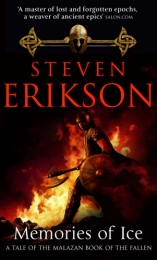
Third book in the series. I started reading it with very high expectations. I knew from forums’ discussions and reviews that this third book was considered the highest peak in the whole series. I came from the previous two that I loved and, especially, after being AWED by the three novellas of Bauchelain and Korbal Broach. Those that won me over and got my unconditional love for Erikson. The difference is that before I came to the books with expectations to match, after having read the novellas I’m now ready to put aside what “I’d like and expect to read” and just let Erikson bring me where he wants. I’ve learned to respect and admire his work and forget the pettish critical eye of the always skeptic.

When I turned the last page I had three thoughts going around in my mind. The first is a sense of emptiness that isn’t new to me when I finish a book that I’ve been reading for a long time. This book has accompanied me for the better part of four months, reading slowly but regularly as is my habit. When I close the book I have this feeling of emptiness, of characters that I’ve learned to know that remain in my head like echoes, lingering feelings. Like trails whose source I’m starting to forget. I know well this feeling and I know its name: it’s nostalgia. For me it starts as soon as I turn the last page. This time there is so much to remember that the feeling was amplified and leading into another: there is nothing left to read. I mean, there’s so much in this book that it leaves you feeling like you’ve read everything. There’s nothing else that could be written. Like a big “the end”. It’s over. The book embraced everything. Like Iktovian, Erikson seems to say, “I am done”.

This is epic fantasy. The embodiment of the abstraction. This book is like a shell, through which you can hear the sea. That’s the magic. It leads to something unexpected and shows you things vividly. Those last 150 pages are so filled with emotions, so inspired that they feel intimidating now. It’s only after those 150 pages that you understand where Erikson was going, you see the ultimate end. Three books to get there.

But I also have to say that I made this happen. While I read daily 15-20 pages for those four months, for the last 170 pages I sat comfortably on my couch and read without interruption from 1AM to past 5. In complete silence. This is something I consider like an obligation. Reading a book is a one-time event. Unrepeatable. It’s a gift that I don’t want wasted and so tried to get in the best way possible.

That feeling of emptiness, absolute fulfillment and nostalgia was the dominant one. Then I thought that it was unbelievable. Imagining in retrospective, the author that is about to write the first page, and is thinking about the last. You look back now that it’s over, and it’s simply impossible. This is not a human endeavor, it’s just crazy. Insane. It’s unbelievable the goals he set, it’s unbelievable how he wrote page after page, it’s unbelievable where he arrived. A mix of genius, insanity and carelessness. And, obviously, awe on my side.

Third on the stream of thoughts, was my surprise about a particular aspect. Throughout the book I saw one of his goals and believed it impossible. On the forums I even explained and discussed this point. Often Erikson deals with feelings and concepts that transcend the human level. In order to make a reader “feel” you have to use something that “resonates”. Something that we have in common. Something archetypal that we all know and share, and that we could impersonate again. That’s the only way you reach an emotional level in every form of art. If you read the forums the common complaint about Erikson is that his characters fail to really reach the heart, so it’s easier to appreciate the books through the mind than through the heart. Even his writing style is more rationally involving than is emotionally. In this particular case I’m talking about within the book, Erikson tries to convey a feeling of endless despair that belongs to the T’lan Imass (an undead race in the book). So I was explaining on the forums that I can appreciate Erikson’s goals, I can enjoy what he wants to do and be awed, but this will only work on the rational level since I’m just unable to “connect” with an alien race like the T’lan Imass. At various points in the book Erikson tries to “force” the feeling, and instead I felt like it wasn’t quite working. It was a best effort, but it just wasn’t possible and so felt somewhat “blunt” and failing in the end. Well, the end of the book was able to achieve fully what I felt as impossible. Throughout the whole book it seemed that Erikson was rinsing and repeating, forcing something that wasn’t working well. With the end of the book he succeeds. Those feelings passed through without losing completely those alien traits. The book made me live something that was utmost unique. That single aspect.

That’s why I think the book is the embodiment of epic. It’s insanely ambitious, sets goals impossible to reach, staggering. And gets there. “I am done”. And it’s because he is done that I wonder where he found the energies to write further. There isn’t anything else to write. It’s over. This book reads as the final chapter. The hanging threads are superfluous sophistications that may as well stay there floating in potential. I read book 1, intrigued, though the ending was rushed and too forced in its spectacularity. I had my mind filled with questions that I wanted answered (as after watching an episode of Lost). I started reading book 2 to get my answers. Loved Heboric because as an historian he was the symbol of all my longings. By half of this second book I got most of my answers. By the end of the book all those answers were turned on their head and all my theories fell apart. In fact I was upset because I didn’t think the plot was going to make sense. Too many contradictions. Besides, the last 250 pages weren’t written as well as the rest of the book. The usual convergence felt again a bit too rushed and two of the three plot lines were dull in the way they were presented (as usual I explained this better in the comments to the book). Great book nonetheless, but I was still there longing for answers and to start making sense of the whole thing. Then I read the novellas that suprised me for all different reasons. No more caring much for the intricacies of the plot, but being awed by the *writing* itself, the sheer creativity and surprises at every page. A careful masterpiece, word by word, in a completely different way from the other broader books. I started this third book to get back to the hanging plots left by book 1, once again to get my answers. By half of it I got most of my answers, by the end of it, I didn’t care anymore.

While reading through book 1, 2 and most of the third I was wondering why there weren’t more discussions on the forums about the mysteries and hidden plots. The great majority of readers are much further with the books so I believed that they OUGHT to know more about what I wanted to know. Instead not only they didn’t, but in many cases they didn’t have any clue about *what I was asking*. Like if I was reading an entirely different thing. Well, it was true. There are two aspects to consider. One is that this series is like a parallel to Lost, the TV series. Both use some of the same tricks and Erikson uses some of them even better. One of the tricks is to force the attention of the reader onto something else. You fill a first part with mysteries, then continue to shift the focus till the reader/spectator is enthralled by brand new mysteries and forgets about the firsts. Erikson does some of this through some kind of chinese boxes, and it works great. What you think was a mystery onto itself, reveals to be part of a MUCH bigger tapestry. The box contained in a much bigger box, and the bigger box into another. Those questions and mysteries kind of fall to irrelevance when you realize that all you got was nothing in the bigger picture and you were trying to put together a puzzle of 5000 pieces by matching together just an handful. If you look for Agatha Christie kind of flawless weaving you are going to be disappointed as it is very likely that some of the pieces are mistakes and not just masterful misdirection (and multiple level of meaning, something Erikson does well), but the way he manages these unexpected transitions from a lower level to an emergent one is eminently enjoyable. It’s also with this third book that something changes. In book 1 and 2 you were just trusting the writer and just add more pieces to a borderless puzzle. It was pure chaos as there was nothing conventional or expected. A blank board with a stream of pieces coming in, the reason why most readers are welcomed with absolute confusion and bafflement. The third book instead starts to fill the gaps. After having drawn the horizon, you start to grasp the big picture and “belong” more to the world Erikson created. So starting to understand the pieces, recognize them and play with them. I was saying how the mysteries “escalate” to upper levels so broad that the details fade out, and how Erikson diverts the attention to new “live” threads, making others less important. Secondly, and here we come to the point, it succeeds where he was failing. Characters, emotions. After working so much on the rational level he finally succeeds to bring the characters to the front, and with the ending of this third book all of the sophistications of the plots that crowded my thoughts during the previous books became suddenly less relevant. I wasn’t thinking anymore about why Dujek was contradicting Laseen, or who killed who during the sieges of Pale. I was thinking instead of the characters and the sense of emptiness (nostalgia) they left in me. I was there sharing something with them.

After this endless stream of unbelievable praises do I think the book is flawless? Well, if I have to rate it, it would score a perfect. Simply because it is a success on what it wants to be, and what it wants to be is something I’ll remember for a long time. It doesn’t mean that the book is perfect, but that the problems fade out and I don’t consider them as relevant as in the previous books. For most of this third book I thought that the writing quality and style was overall a little below of book 2 (or at least book 2 minus two plots at the end of the book as I explained in that commentary), I also thought that if I had to rank them I’d put the second on top. That before reaching the end of the third book. Now I really couldn’t put this third book below and I understand all those readers who think that it’s the highest peak of the series. Deadhouse Gates has an overall better execution, beautifully written, but the ambition (and payoff) behind it just can’t compare with what Erikson does here.

There are other aspects I can criticize. The book is, shortly put, wasteful. To those who think that books this long (1100 pages) are unnecessary, I’ll say that these are not 1100 pages written by a writer who’s trying to fill 1100 pages. These are 1100 pages written by someone who’s trying to *squeeze* into them all he has in his mind. The pacing of the book is relentless and those pages without action are the pages that in the end are more important and filled with revelations (so moving the plot). I say this is wasteful because there’s just too much. While the end works on its own and justifies the journey, for the first half of the book Erikson wastes a number of valid ideas without playing them to their full potential. He fires them into the air clumsily and brings them down shortly after. He wastes opportunities. He builds up mysteries only to spoil them two pages later (if not on the same page). The pacing is so sustained that you have no time to let characters and feeling linger enough. A case of excessive creativity and drive. In retrospective I now understand better where this “urge” came from. There was to much to do for the destination that he already had an insane number of balls to juggle in the air. As I said, this book is insane.

At some point halfway through the book there’s an idea extremely interesting. One of the main characters has a crisis of faith and starts to question what he believes in. His words are pure beauty and deep. This is also an extremely important transition in the plot. I’ll quote it again:

And perhaps that is the final, most devastating truth. The gods care nothing for ascetic impositions on moral behaviour. Care nothing for rules of conduct, for the twisted morals of temple priests and monks. Perhaps indeed they laugh at the chains we wrap around ourselves – our endless, insatiable need to find flaws within the demands of life. Or perhaps they do not laugh, but rage at us. Perhaps our denial of life’s celebration is our greatest insult to those whom we worship and serve.

The character here has made a vow to his god and is now wondering if the gods are really caring about these demonstration of faith. Maybe that vow is instead an insult to the gods, what he calls a “denial of life’s celebration”. Why life shouldn’t be experienced fully? Why “our endless, insatiable need to find flaws within the demands of life”? It’s beautiful not just because of how it was written, but because those words have depth, truth (and not, like Gene Wolfe, just a way to “adorn” in fancy, sophisticate words a simple concept).

‘You question your vows.’
‘I do, sir. I admit to doubting their veracity.’
‘Has it been your belief, Shield Anvil, that your rules of conduct has existed to appease Fener?’
Iktovian frowned as he leaned on the merlon and stared out at the smoke-wreathed enemy camps. ‘Well, yes-‘
‘Then you have lived under a misapprehension, sir.’

I won’t spoil the solution of this passage, but I’ll use it as a concrete example of how Erikson doesn’t play many of his ideas to their full potential. This whole transition and character development (and resolution) I’ve hinted here is contained in TWO PAGES. It is beautiful, deep, not at all simple. Filled with potential and interest to my eyes. Kept me glued to the book. But completely contained in 2 pages among 1100. This is the pacing of this book. All the book is like that, filled with different threads and crazy ideas that come and go page after page. Every page is a pivotal point and this rhythm so sustained becomes somewhat detrimental as there’s no way to make all these things “settle” in the mind of the reader. Once again, familiarize.

This is what lead me to write that other commentary about character development. Without “slices of life” or time to familiarize, the readers will feel disconnected from the characters in the book. If deep transitions and shift of motivations happen in the space of two pages, like the Iktovian example here, then it will be hard for the reader to relate to them and share/understand their feelings. At the same time this is a strength for Erikson. His unique style. The journey isn’t a typical, already seen one, the characters aren’t conventional, and they develop in unpredictable ways that demand a big effort to the reader in order to keep the pace and understand this type of complexity. Lacking the redundancy that is typical of the genre (these days I’m reading Goodkind and the parts of it that work well work exactly because of the redundancy). The more I think about the book now that I read it from beginning to end, the more I realize that there wasn’t any other way to write it.

Typical deus ex machina associated with Erikson are part of this case. There are many in this book. They make sense, are part of the world. But the tapestry is so broad and the threads so disparate that when it all comes together in the end you can’t avoid the feeling that all of that was “guided”. This will annoy purists, but in this case the “intent” is itself the reward. There wasn’t any other way. This story told itself. The hand “driving” plot threads and characters along isn’t an intrusion, but just the way the story told itself in the way it should. Iktovian is an example because Erikson builds the character through the book to “get there”. There wasn’t any other way to do it. “Destiny” as a destination that ultimately follows a sequence of steps. Similar to the Greek myths and legends that Erikson uses as inspiration, and whose metaphoric value he tries to give life to. Salvation, tragedy and a whole lot of other undertones. Themes high and low mixed together. Sleight of hand and awe.

Either you follow (and be willingly to follow) Erikson or this whole thing just won’t work. On the forums I read all sort of criticism and a good amount of it is poorly motivated. This leads, even from myself, to claim that those readers “do not get it”. Too often what happens toward the whole genre, and is promptly defended by everyone, happens again within. People attack the book because it has an excessive use of magic, powerful characters, huge battles. Well, my opinion is that these books are great IN SPITE of those. It is when Erikson is most realist and delves deep in his themes that he is most successful. But why using the spectacularity as an argument to diminish the books? It’s “serious literature” vs fantasy all over again. The same mistakes repeated by those who are this side of the fence (appreciating the genre) and that should know better than criticize something through stupid, superficial arguments. It’s diminishing without understanding. So I say that when those arguments are used, readers “do not get it”. Erikson is a lot more than what drifts on the surface. If all you notice is the powerful magic and characters then it means you are gliding on. Losing the great majority of the meaning of those words.

The payoff is then only proportional to the dedication. Erikson will never work too well for the large public. It will never be an easy and almost safe recommendation (like Abercrombie or Scott Lynch). It will never be for a “majority”. It will never work for a variegated public on different levels (and ages). But if you are on the same line and are interested in its themes and intent, then it will be nothing short of grandiose. More than a book, a journey.