Author Archives: Abalieno

Taking the occasion of a forum discussion to clarify what Postmodernism actually is and how it works. Described in a way that is both powerful (it points to the real heart of the meaning) and easy to use (you can immediately say on your own if some work falls in the category).

Listen to me, but also consider I didn’t specifically study this at school nor I’m giving you a definition that is “orthodox”. I claim for something more: this is a so powerful definition that intrinsically defines everything falling under the Postmodern umbrella with no exclusions, and whether an author is aware or not of writing something Postmodern. Some stuff is legitimately Postmodern even if not normally identified as such, especially because it comes from something that is the center of a Post-modern world, so you are under its influence regardless of your awareness of it. It’s this world and age to be “Postmodern”.

So when Erikson says that Malazan is Postmodern, making it even harder to pinpoint, or when bland terms are tossed around like “meta-narratives”, “deconstruction”, “skepticism”, or “unreliable narrator”, “fourth wall”, and so on, then you’d know that they are all flavors of the same thing. And knowing the thing itself makes you understand why it can have so many different flavors, and what is that unifies them all.


Reflexivity and self-awareness.

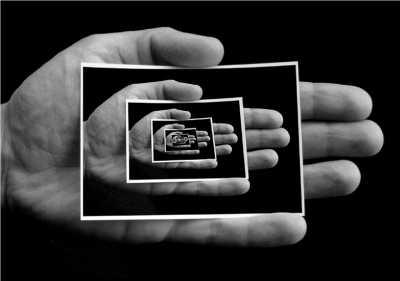
Postmodern Literature is basically writing about writing. Everything “meta” (Gödel) or metalinguistic belongs here. The writer being a character in the book is basically a signature trope, but the point is: worlds within worlds. Escher’s Drawing Hands are postmodern.

In general: the frame and what lies beyond. The frame of a painting, the frame of a book, being the book itself, the pages, the ink. In general all these, in classical stories, are invisible. But in postmodernism they are subject. What’s outside the picture is what the picture is about. The frame itself. So again: reflexivity and infinite loops.

Myse en abyme.

That’s all you need to understand. Everything more commonly recognized as postmodern is a subset of the core I’ve pointed to. For example “questionable narrators” are part of this because a narrator is himself a framing device of a story. Being the frame itself the focus, so the narrator, you go and “question” it as an actual character. If classical stories are one-way, toward the story and immersion, with Postmodernism the viewpoint becomes reflexive, and it can reflect the reader himself, or the writer, or the medium.

Same for “fragmentation” and “paradox”. They are devices. They are meta-structure, so metalinguistic. Reflexivity about language and structure.

And all of this surfaces merely because the original framing device, and reflexivity, is the brain. Consciousness.

Postmodernism is about the unreliable narrator that is consciousness.

This kind of stuff goes automatically in my immediate (when/if is out) to-buy list:
http://www.theguardian.com/books/2014/sep/10/alan-moore-finishes-million-word-novel-watchmen-v-for-vendetta

Comics legend Alan Moore has finished the first draft of his second novel, Jerusalem – and it runs to more than 1m words.

has been working on Jerusalem since 2008.

It focuses on a small area – half a square mile across – of the town where he grew up, Northampton, and explores its history through stories from his family’s past, Moore’s take on historical events, and of course fantasy. “Any editor worth their salt would tell me to cut two-thirds of this book but that’s not going to happen.

as long as I get my huge, cripplingly heavy book to put on my shelf and gloat over, I’ll be happy.

a section will feature his brother’s adventures in the fourth dimension, while the “middle bit” is “a savage, hallucinating Enid Blyton”.

there is also a “Lucia Joyce chapter, which is completely incomprehensible … all written in a completely invented sub-Joycean text”, a chapter in the form of a Samuel Beckett play, because the author once visited the town to play cricket, “a noir crime narrative based upon the Northampton pastor James Hervey, whom I believe was the father of the entire Gothic movement”, and “a combination of the ghost story and the drug narrative”.

“I am currently on the last official chapter,” he told the Guardian late last year, “which I am doing somewhat in the style of Dos Passos.

There is no word yet on an official release date for the book, and Comics Beat reports that it has not yet got a publisher

Just a link to an article, whose theme is already a delicious example of Looping Worlds and wheels within wheels: Reading Wallace Reading.

“Do you have like a daily writing routine?”

While immensely lagging with my reading queue, I was looking at my copy of Gravity’s Rainbow, menacing to start reading it. Not yet, but there’s this quote from Weisenburger’s companion book:

In my view, the most significant revelation of the annotations is that Gravity’s Rainbow unfolds according to a circular design. Across the novel’s four parts, historical events intersect the Christian liturgical calendar, suggesting possibilities for return and renewal, but possibilities that Pynchon’s satire hopelessly equivocates on. This means that readers might have a novel as elegantly modeled as Joyce’s Ulysses and have their deconstructionism too. Indeed, one might well read Gravity’s Rainbow as a satire on the very desire for grand plots or metanarratives, a desire the narrative unmasks as the terrible dynamic of a culture huddling on the brink of nuclear winter.

If it’s accepted that GR is a book squarely within the postmodern canon, to the point of representing it fully, then from my point of view what’s written there contains the most manifest aspect of postmodernism.

Try to abstract the pattern there. This quote says the book is modeled carefully, as a meta-structure or a kind of organization that exists on a different level. At the same time, these two levels wrap around (return and renewal). So, abstracting, we have a dichotomy of structure that at the same time returns on itself. What have I just described? Self-reference.

The pattern described can be narrowed down to a line of that quote: “have a novel as elegantly modeled as Joyce’s Ulysses and have their deconstructionism too”. Which is made of a blatant abstraction: “have a cake and eat it too”. Again, this is Gödel and self-reference. The structure has its built-in paradox of the dichotomy of the mind.

On top of that basic pattern there’s also the postmodern “flavor”: satire and humor. Mocking the very premises, the supports you’re standing on. Which becomes, in a circular way, self-reference on itself: what makes the novel is what is mocked, yet is what is relied on, yet is what is mocked (and so on, see the next quote). This self-reference is both object and subject (being self-reference), it’s both validated and then demolished. Serious-and-not. Self-doubt of the self-feeding kind, degenerating into the neurotic (so “of the mind”, which is the point, since it’s literature, which is of the mind, which is the point).

While Pynchon surfs the wave of postmodernism, on the very razor edge, without bleeding. David Foster Wallace instead cut himself.

Writing is a dangerous sport.

Infinite Jest, despite the jest, loves, carefully builds and worships its meta-strcuture. It is god-like as it gets in literature. Yet there’s the deep suffering in the background that is as authentic as it gets. It takes itself VERY seriously.

There’s this super short story by DFW, with its droning, neurotic, looping last line:

A Radically Condensed History of Postindustrial Life A short story by David Foster Wallace

When they were introduced, he made a witticism, hoping to be liked. She laughed very hard, hoping to be liked. Then each drove home alone, staring straight ahead, with the very same twist to their faces.

The man who’d introduced them didn’t much like either of them, though he acted as if he did, anxious as he was to preserve good relations at all times. One never knew, after all, now did one now did one now did one.

Nothing is real, especially what I’m telling you.

I randomly bumped on this old Erikson interview. A couple of quotes:

The dialogue that I have written that I remain pleased about is generally the tersest kind. The massive understatement. The line with a hundred volumes hiding under it, pages ready to explode but all, somehow, held back, contained. Exchanges where all parties skirt around what’s really going on. Evasions and the like.

Well, that’s what I like reading indeed :)

1: Finish what you start.

2: When a scene drags, when it gets brutally hard to get out the next line, the next word; when blood starts beading on your forehead, don’t switch scenes, don’t shift characters, don’t do any of the running-away things you might be inclined to. Push through. Everything up to that point was the lead-up to this moment, and this moment is when you learn – you learn how to write, what it is to be a writer, and all the reasons you possess for being one. That tight, claustrophobic place, is your call to courage. Don’t evade, don’t back away, don’t shift laterally. Keep going, until it hurts.

3: Finish what you start.

Oh well, please bear with me. I don’t want to offend anyone, but see the category, this goes into “mythology”.

A big part of what I seem to do on this blog is about recognizing some recurring patterns about the most disparate things. The world is incredibly complex but sometimes I recognize these common patterns, and in the end there seem to be a smaller number of them. Whether “true” or not, these patterns have a significant explanatory power, so by using them I often understand other aspects I otherwise would miss. So, even if dealing with a rather complicate and sensible matter, I’ll naively describe another of these patterns.

Obviously, this specific one isn’t a novel problem. In fact I bet a common reaction about the recent news has been: “Oh shit! AGAIN?!” It’s more or less like parents that come back home and find that the kids are fighting again.

One of my basic intuitions, many years ago, was that the core of the Israeli–Palestinian conflict could have been represented by another type of conflict that is just far more widespread and common: mind/body dichotomy.

The pattern I’m describing here is that, rather often, large social structure, like organizations, nations, religions and so on, often exhibit general models of behavior that exist within a single human being. It’s as if a social body is indeed a conscious body, with all the shortcoming, conflicts and problems of an individual human being. As if parroting an actual person.

So it’s as if you can “project” on this larger social body the issues that usually belong to a single person. Having a metaphoric power. But, actually, from the original perspective of Kabbalah, it is curious to notice that what I described as a metaphor, for them it’s LITERAL. Since the physical world is strictly illusion, what you see reflected outside yourself depends solely on you. Literally, the Israeli–Palestinian conflict is YOUR FAULT. Really specifically yours (or mine), as a single individual being. If people are dying it’s because of what you’ve done today. It depends on you, you monster.

See this video and notice it’s from 2006:
https://www.youtube.com/watch?v=3TxuGjuhECA

Even this video presents its own dichotomy: Israel versus Nations. Explaining (since all Kabbalah terms are strictly symbolic) that Israel = desire for unity & spirituality, and Nations = striving for mere self satisfaction.

When I came to my own intuition about mind/body I didn’t know anything at all about Kabbalah, but the pattern is rather similar. Getting closer to the point, more than mind/body, this is a conflict of the more “rational” side of the mind, and it’s “emotional” side (because usually rationality = mind, and emotion = body, we’re just switching tools and shapes using the same pattern).

Now. Take Israel. Would you put it on the emotional or on the rational side of conflict? Israel represent rationality. It’s the modern nation. It’s recognized by the western world and legitimated as so. It has the military power. It’s more culturally “developed” (not a quality on itself). Israel represent the official institution that is clearly defined and recognized. Its forms are rational, overt forms. Explicit.

Take Hamas. Terrorism in general is emotional. Religious fundamentalism is especially symbolic and non-rational. It’s an emotional push, it’s less directed. Despite terrorism is really NOT tolerable and can’t be justified, it still has a form of legitimation: when people are so hopeless and feel crushed in a corner, they leash out, with blinding rage and despair. Terrorism comes out of desperation. It is never justifiable, but it can be understood. It just has very deep motives, buried down, away from the rational light of history. It’s the irrational beasts lurking in the dark. A monster. It broods and incubates, till it bubbles up. And explodes, apparently unjustified.

Another step forward: more than simply rational/emotional, I can describe this conflict as taking the form of another rather widespread condition: a panic attack. What’s the most obvious trait of a panic attack? That it is extremely counter-productive. And irrational. You literally can’t explain WHY it happens and WHY it ruins your life now. You just want it to STOP. The panic attack is indeed the result of a deep conflict between the rational and the emotional mind. Or: identity versus rational. Identity, in this definition, is what can’t change. It just can’t. It can’t be moved at all. It’s what you are deep down, regardless of all your struggles. Rationality instead is the part of the mind that goes “social”. It’s the part that wants to be included in the world, that bends under external demands, like the desire to be successful, popular and so on. That needs to achieve and perform. This side is also the only side the external world is interested in because, to reproduce itself, it needs vessels that are uniform. Alike. Society reproduces itself when it can conquer cells and make them like itself. Transformed into something usable. Reproducible. So society forces a conformity. Otherwise, if you don’t bend and conform, you are banished, a thread, become outcast. The rational side of a person STRIVES HARD to conform itself, to become as society demands. And this obviously puts the identity side on a very strong pressure. Because identity just won’t move. What happens then when you have two things, one that won’t move, and another that pushes and pushes hard? That this thing breaks apart. It literally comes to pieces. And it can take a lifetime, if you’re lucky, to bring those pieces back together. Hence all kinds of problems, from drugs to psychological meltdowns and everything else. People break because they are pulled apart in two different directions.

Back to the panic attack. A panic attack happens when the rational mind has pushed (and violated) the needs of the emotional mind so deep down that at some point the emotional mind just EXPLODES. A panic attack is literally the emotional mind sabotaging the activities (and needs) of the rational mind. It’s a bomb. It destroys what you want to do. It stops you. Obviously, it’s extremely counter productive. It arrives at the worst possible moment, as if your body HATES you with a passion. And you, because conscience is the rational mind, you HATE your body with a passion. Because your body doesn’t listen to you, doesn’t respond the way you want and keeps sabotaging what you need to do. The body is your enemy, as if it’s a stranger, that you don’t understand and works against you.

Now, back to Hamas you can notice that all they do is EXTREMELY counter productive to their own causes. If their demands are legitimate, in many ways, THEIR ACTIONS throw all that legitimacy to shit. They do the worst possible to their own cause. If this was a tactical battle, they handle it in the worst possible ways because they just keep making their own position worse and worse. Why so stupid? Because it’s irrational. It’s the emotional side that has been crushed so hard against the corner that it is only able to leash out with rage. Just blind irrational rage you’ll never be able to justify rationally. It doesn’t make any sense, and at some point you just wish you could erase them from existence so that they just fucking stop, and be done with it. And that’s Israel’s answer. Either you stop NOW, or I fucking obliterate you.

The other aspect about Hamas, if you listen to what they say, is that what they say is extremely… childish. They won’t stop launching their toy rockets that do ABSOLUTELY NOTHING if not justify Israel ACTUAL killings because it would be like “giving up”. Kids don’t give up. Ever. And then they say they’ll UNLEASH THE APOCALYPSE. Which is extremely serious and ominous. But also so childish again. Why? It’s irrational again. They speak through symbols because they are an emotional side. They are arrogant because kids are arrogant, especially if cornered.

And then it all seems to bog down to another: who started first? If you stop then I stop too. NOPE, YOU STOP FIRST! BUT IT WAS YOU WHO STARTED! And so on, like kids.

In Infinite Jest, David Foster Wallace played explicitly with this pattern working on multiple levels. Buildings that become alive, conscious. Forms that are shaped-as, but that also become. Prosthetic bodies. The MIT thing from where Madame Psychosis plays her night drama is shaped like a brain. In “The Broom of the System” the town is shaped like a human profile, and by the end of the book it actually comes alive. Again in Infinite Jest the human double bind that is often described in various forms represent what I just described in the Israeli–Palestinian: a vicious circle. Which is the symbol that opens every chapter. “Annular”, is a keyword of the book. If in a single person the anxiety’s double bind is a vicious circle that seemingly goes on forever dispersing endless psychic and physical energy, this becomes the inspiration to create a kind of vicious circle that, based on trash (which also is a psychological projection), can produce actual energy to power the whole of United States. Forever. Annular Fusion. And “annular” is also the shape of the conscience in the mind. And annular is the structure of Infinite Jest, the book itself, looping on itself. Ending where it starts (but missing a year). It’s both parody and projection on the large of what happens instead “within”.

The same suggest the Kabbalah in that video, but literally (the spiritual self and its struggles projects the physical world and its struggles), and the same I described, more metaphorically, with the Israeli–Palestinian conflict.

Is the real annular fusion the ring of self-consciousness that leads us to feel trapped in our solipsistic cells?

Whether you believe in the hard form of projection (Kabbalah), or the weaker, merely metaphoric and symbolic one I described, I think the form of the pattern I just described can “explain” why this conflict goes on forever and seems at the same time completely ridiculous and yet so dramatic and unsolvable. Because it’s just so deep in all of us, and it’s out there, reminding us the way we are. No so different, or “better”, as we like to think. Nor stranger, or so far away, and “safe”, really.

This means that the Israeli–Palestinian conflict won’t be solved by just putting each in its own territory. That’s only fuel for the worst to surface again and again. The conflict will be solved when they’ll be able to be together (a mind can’t do without a body, go figure), realizing there’s no difference between them, and that to live in happiness they need each other. You know, brothers and sisters, and all that rhetorical banality.
I was looking at Subterranean Press limited editions of the Malazan books and being quite disappointed at the art there. But then I always am with that sort of stuff.

For fun I decided to describe what I’d instead put on the covers. I’m not an artist, but this is the sort of stuff I see in my mind and that I think would look great. Obviously just the first five books, because I’ve still to read the rest.

1- Gardens of the Moon. Well, Pale. Camera at the ground level, bottom up. You see at a distance Pale’s high walls, enough to give the walls some details and impressive scale. The cover should have a sense of verticalness to it. So the eye is drawn right at Pale’s walls, imposing, going upward. But then the impressive vista should escalate in scope as hovering above Pale you have Moon’s Spawn, maybe very slightly askew. So no characters on the cover, just a wide view of the scene, to focus on scale and scope. It should give a sense of disproportion, as if you cannot give a proper size to the elements in respect to each other. Sense of wonder.

2- Deadhouse Gates. Chain of Dogs. I’d go with top down, a look at a valley far below from an high point, the Chain of Dogs going through it. Not close enough to really detail people, just again giving a sense of scale at the long trail going through the dry land. Capemoths and stuff. Warm colors along with a sense of bleakness in the environment. Could even play with dust forming up a skull-like shape, in the background, but very subtle.

3- Memories of Ice. Just Kallor on his throne of bones, right in the center of the cover, arms open wide, hands too, but relaxed, as in welcoming. The layout should have a sort of curve to it. So that Kallor is almost facing the center of the cover, while the bottom part of the cover is through a top down angle. In this part, the three gods. K’rul in the center (bony, accusing finger pointed at Kallor), Draconus on left (I can’t remember if he has the sword already, if he does, let it drag behind, like a sack barely held by one hand), Nightchill on the right. All facing away, toward Kallor, from this slightly top down perspective to give the image some depth. The cover should be black & white (I’d love a strict ink style, no shading), with some slight/faint bluish highlights.

4- House of Chains. Oh, think of Hamlet holding the skull in his hand. Only that Hamlet is Karsa, and the skull is a poor Malazan soldier (looking like a child compared to Karsa’s bulk). The cover should be almost like a silhouette in black. On the right you see Karsa’s impressive sword thrust on the ground. No detail, just a black shape, slightly tilted and about as high as Karsa. It should dominate the view even if aside. Karsa should be with a knee down on the ground, a massive hand completely wrapping up the Malazan soldier’s head, helm still on (and the whole body still attacked, not just a head). The scale of the hand should be massive, dominating the comparably small head, as if about to completely crush it in his hand. The guy is dead, but Karsa is lifting him, so he’s as if upward, hanging from Karsa’s hold, just the feet and lower part of the legs dragging slightly aside on the ground. The height of the guy should be almost level with Karsa, who’s kneeling down though, so bringing the height ALMOST on the same level. Exception to the silhouette style is: the scene has some depth to it, Karsa slightly on the back, the soldier slightly on the front. One trick is: Karsa isn’t looking at the skull, but right through the cover, right at the camera. The scene should also have a sort of dichotomy that fits well as a theme. In the back you see a forest at dawn, mountains in the background, or some T’lan construction (as in the book). But a peaceful, warm colored scene. Then there’s a sharp cut, with Karsa and the soldier almost like a dark silhouette, so much darker, but enough to give them a lot of detail. Just lack of color. So you have these two different levels, the warm background, and the very dark foreground. With Karsa frowning at the camera.

5- Midnight Tides. That scene at the sea, where the massive thing comes out out the water. Something inspired to the third picture you see here. Scene again based on wide scale, slightly tilted for dynamism. Camera from the land looking out at the sea. Looking like something straight out of the apocalypse.