Author Archives: Abalieno

To escape his country’s harsh economic conditions, Jeon Seung-chul (played by the director) defects from Musan, North Korea to Seoul. He ends up living in the city’s rundown outskirts and makes ends meet putting up street ads. His only satisfaction is going to church, where he meets and becomes attracted to Sook-young, a choir singer who works in a karaoke bar by night. The Journals of Musan depicts the tremendous difficulties North Koreans have integrating in the capitalist society of South Korea, where they are often marginalized and subjected to discrimination.

I watched this movie today at a festival (same as this, a year ago). Another Korean movie and another masterpiece. It won “Best New Filmmaker” at the Tribeca Film Festival. A dramatic story of a North-Korean “defector” (Jeon Seung-chul) trying to stay afloat in Seoul. A shy guy, very respectful, head always bowed down, always staying on his own and barely saying a word. The filmmaking style is equally respectful (“deferential”, as written below). Never forcing scenes or exploiting them artificially. Very self-consciously. There are many scenes where the humor or the dramatic effect could have been boosted, but they aren’t and the story keeps its natural, unbiased, “muted” feel. No forced perspective.

There are a few key points. One is that there’s a religious theme at some point. There’s a religious song of which a couple of lines link back to the movie and can be used as interpretation. One is about how God saved the like of a “wreck” like “me”. As a prayer, being thankful that God had regard EVEN for a “wreck” like oneself. The other is that this salvation brought clarity. I was “blind” and now I see and understand.

Only that this story has no salvation. It’s not a cynic view on religion as these religious guys in the end are the only ones who (somewhat) accept Jeon (the protagonist). Yet the truth behind this story is that there’s no salvation at all. A fish out of the water sooner or slightly later dies. There are actually more than one ways to interpret the movie, as a tragedy or in more optimistic ways.

At some point I started to think in the perspective of the passion of Christ. And the Father/Son. The Father let it happen. He watched it. He watched his son being crucified and didn’t move a finger. See this then in the world’s perspective, the tragedies of every day. Stories, likes this one in the movie, based on a real story apparently, that have only innocent victims and no happy end. The Father, all-seeing. Not moving a finger.

The dog in the image is the puppy that the Jeon saves (from the world/environment) and tries to protect. Anti-god. He tries to do all he can and more even if already in the deep end of trouble. A puppy again like the reflection of someone living in a hostile world. A puppy that, left alone in that city, would likely die. In the puppy there’s the reflection of the protagonist, and it’s on the puppy that we see the protagonist’s “compassion” (hello Erikson, the themes are all renewed). A victim trying to save another. Jeon gets beaten a number of times by some thugs while trying to do his work, yet it’s only the third time, when he has the dog with him, that he fights back. To save the dog from them. He goes to search for him around when his “friend” first tries to sell the dog, and then abandons him after he figured out he couldn’t get anything from him. Saves again the dog’s life a number of times. Keeping him afloat as he was trying to do with himself. The movie ends with a “long take”. He gets again the job at the Karaoke, after he was being unjustly berated and fired, and after the woman pitied him when she learned he was being discriminated as North-Korean and was having a very tough life, the woman asks him to go out to a shop to get beer for customers and gives him as well something to eat for the dog. So we see this long take of him going out, feeding the dog for a while, then walking through the road to the shop, getting the beer making sure it’s of the right kind as asked, then walking back. A long, uninterrupted sequence. At some point it hits, but it’s entirely on the viewer. The camera follows the man from behind, not too close, looking at the whole road. He continues to walk down the road and it’s you, watching, to realize, whenever you manage to notice and without cuts in the scene, that there’s something in the middle of the road. Jeon continues to walk till he’s 2/3 feet away from his dead dog. Probably hit by a car while he was away. He stays there watching the dog, the scene running uninterrupted. The street is quite trafficked and cars start to move Tiananmen-like around the silent, unmoving Jeon and the dog on the ground. After a very long moment Jeon moves another step toward the dog, then continues on, walking past him. And the movie ends.

Maybe I’m a cynic but the way I see it is that Jeon tried to save the life of the dog. In the end he couldn’t do much, the dog died not because of all the previous threats he was saved from, but simply hit by a car. A city, an environment not hospitable. A fish out of its water. The kind of fate that likely happened to Jeon himself later. So god is watching, but the only ones who seem to care are “us”, victims.

The fallen.

P.S.
My spectation included a woman behind me that squealed aloud every time something bad happened to the puppy, but that watched impassively whenever all sort of bad things happened to the protagonist. Women…

“Critics” opinions from the internet:

Some of the best films can be found in the new, catch-all “Viewpoints” section, like writer/director/star Park Jungbum’s strong debut, The Journals of Musan, based on his real-life friend, Seung-chul, a North Korean defector in consumer-crazy Seoul. Park has no other agenda than to put the viewer in Seung-chul’s shoes. Like the film’s other bemused characters, the viewer will likely misjudge or at least change her/his opinion of the stolid man underneath a severe bowl cut. He earns just dollars taping (alas, not plastering) posters for a few dollars during the day, and at night he buses tables at a karaoke bar (for $4 an hour) managed by a pretty woman he first spies in church. (The film features one of the most beautifully directed scenes I’ve seen in a long time—a cringe-producing karaoke version of a Christian hymn.) Seemingly simple, deferential—stunned, really—Seung-chul’s slow to react, even when bullied. The only friend he has is a dog he finds on the street. (You’d be crazy not to be reminded of De Sica’s Umberto D). And it’s another film from South Korea that depicts Christianity without cynicism or condescension, in which faith plays an important motivator. (Park has worked as assistant director to Lee Chang-dong, whose Secret Sunshine is another probing, expansive film that deals with faith.) Finally, for dog lovers, it also features the cutest. Puppy. Ever.

As a North Korean defector now living in South Korea, Jeon Seung-chul, the based-on-true-life main character of writer/director/star Park Jung-bum’s debut feature, The Journals of Musan, endures all sorts of marginalization and abuse as he barely scrapes a living together putting up posters on walls. Truth be told, Park’s film itself sometimes feels like punishment, from its Dardennes-like aesthetic to its general humorlessness. Nevertheless, there are glimmers of a real, if amazingly bleak, worldview underlying its dour surface, as well as a tough-minded compassion that one might even go so far as to call humanism, that makes the end result feel less like the condescending wallow in ugliness that one might have expected.

The only levity from Jeon’s marginalization comes from the stray dog he eventually takes in and cares for—despite the protestations of his cheating, manipulative roommate. Yes, this character detail comes right out of Vittorio De Sica’s Umberto D. (another story about a down-on-his-luck outcast and his dog), but Park employs the detail in his own interesting ways. With most of the human beings around him giving him nothing but grief, the dog, of course, becomes Jeon’s only source of nonjudgmental love and companionship. (When his roommate angrily leaves the dog out on the street one day, Jeon naturally panics; tellingly, Park chooses this one moment to unleash the film’s only point-of-view shots.)
I had to pull the book from the shelf (since I’ve not yet read it) because I got curious. There was a comment on Malazan Tor.com re-read that basically claimed that Malazan was shallow compared to Rothfuss’ work. Despite its troll-ish nature (joining Malazan re-read to say it doesn’t deserve a re-read) I’m always curious by how works relate to each other and lately there has been quite a discussion about Rothfuss, with the 2nd book coming out. But from all I read there was a certain consensus that the book had pacing issues and was overlong. Which was exactly the opposite that this poster was claiming:

The degree of depth that’s being unearthed in the comments on the Name of the Wind reread thread have felt to me strongly supportive of the notion that the Malazan books are not very dense compared to Rothfuss, fwiw. I enjoy Erikson a lot as entertaining light reading with addictively much plot and world complexity and find the series worth having for that, but my lack of commenting is because I’m really not seeing that much thematic depth; the notions that war sucks and that compassion, integrity, endurance and bearing witness are virtues are neither points that strike me as particularly subtle or innovative nor ones that need so many thousand pages to be conveyed.

See, I’m pretty sure this guy has absolutely nothing worthwhile to say about Malazan, but maybe he has a point about Rothfuss. I’m not interested in a comparison, but I am interested in finding Rothfuss own qualities. The quality of prose is one I’ve seen claimed the most.

So I went reading the first 30 pages, following the Tor.com re-read in order to see the “degree of depth” that it was “unearthing”. Coming right from Erikson the difference in prose is the most noticeable aspect, and beside it, also the approach to the story. These two lines for example wouldn’t blend too well in a Malazan book:

Graham, Jake, and Shep nodded to themselves. The three friends had grown up together, listening to Cob’s stories and ignoring his advice.

Probably two of the most common lines you can find. There’s nothing weird, or stylish, or significant about them, but they set the story on a level of normality. It’s contained in a slice of life scene that has nothing special about it and actually draws its point from this notion. And again a corner of the world, life made simple, plot details introduced little by little, bits by bits. Hints here and there about hidden elements. Easing carefully the reader in, the story well measured on that reader.

So yes, I see a certain mastery of storytelling. Every sentence drives its point and wants the reader put under that spell that will keep him turning the pages. Feeling the story, the characters, getting involved. It’s a very delicate and caring way of writing, showing passion for the writing itself. It has a traditional air of fairy tales and gives a feeling of safety. The story may include danger, but you know it’s done for the purpose of the story itself. The monsters aren’t real.

Erikson obviously runs opposite to all this. I said many times as there seem to be no slice of life scenes in the Malazan books. No character leading a normal life, caught up in normal business. That kind of relief and reduction of complexity of the world is absent and all the characters are tossed this way and that, snapping between plots. We’ll never know how the Malazan series would look if written from a more relaxed and natural point of view. It’s the opposite of what Erikson does, but sometimes I wonder how it would be.

That’s how I’d frame Rothfuss work at the moment. I recognize a good style of writing honed for a precise effect. I’d say that it sits safely within a tradition, embracing and nourishing it more than challenging it, but this isn’t a “flaw”. I’m far more skeptical instead about “depth unearthed”. It seems to me more of the kind that Larry calls as the “speculative mills”. Meaning that it’s all about piecing together mysteries and doing guesswork about what really happened and finding out all the little hints and mentions of this and that.

But it’s a kind of activity I find dry. I focus on what the writer wants and says, I always stay within the text and do not allow imagination to fill untold stories and alternate possibilities. I know many, many readers thrive on that, projecting themselves in the story and making it their own. I don’t see anything wrong with that, but the “depth” I’m looking for has to be in the text, not in spurious speculation or wishful thinking.

I’m sure I’ll enjoy some “entertaining light reading with addictively much plot and world complexity”, but that’s likely to define more Rothfuss’ work than Erikson’s.

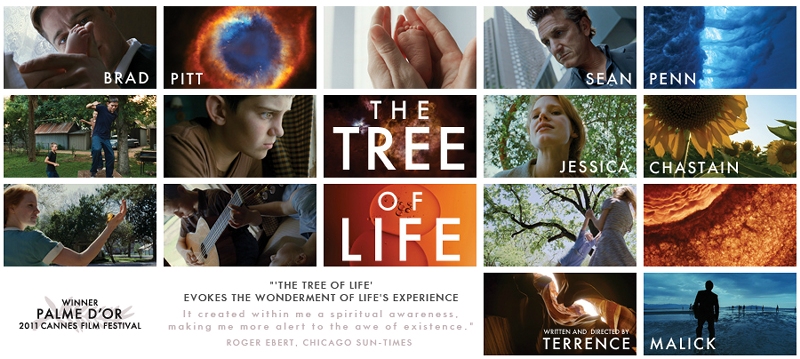
From Midnight Tides. Thematically linked to “The Tree of Life” and symbolic spaces (see second paragraph, it can’t be more explicit than that):

Drawn to the shoreline, as if among the host of unwritten truths in a mortal soul could be found a recognition of what it meant to stand on land’s edge, staring out into the depthless unknown that was the sea. The yielding sand and stones beneath one’s feet whispered uncertainty, rasped promises of dissolution and erosion of all that was once solid.

In the world could be assembled all the manifest symbols to reflect the human spirit, and in the subsequent dialogue was found all meaning, every hue and every flavour, rising in legion before the eyes. Leaving to the witness the decision of choosing recognition or choosing denial.

Udinaas sat on a half-buried tree trunk with the sweeping surf clawing at his moccasins. He was not blind and there was no hope for denial. He saw the sea for what it was, the dissolved memories of the past witnessed in the present and fertile fuel for the future, the very face of time. He saw the tides in their immutable susurration, the vast swish like blood from the cold heart moon, a beat of time measured and therefore measurable. Tides one could not hope to hold back.

[…]

He sat huddled in his exhaustion, gaze focused on the distant breakers of the reef, the rolling white ribbon that came again and again in heartbeat rhythm, and from all sides rushed in waves of meaning. In the grey, heavy sky. In the clarion cries of the gulls. In the misty rain carried by the moaning wind. The uncertain sands trickling away beneath his soaked moccasins. Endings and beginnings, the edge of the knowable world.

I watched this movie today (I guess I make a special case, going from writing about Ultraman to this). I was expecting something dense and complexly layered, instead I saw a surprisingly simple movie. Beside the (legitimate and laudable) pretentiousness of these “artistic” movies there’s nothing that it’s cryptic or hard to figure out here. What it wants to say is clear and straightforward, easily interpreted by everyone, as long one doesn’t fall asleep and lets the movie lead and set the flow. It’s a movie that rewards a humble, trusting approach.

Long movie, two hours and half, without a linear narrative or even a traditional use of language. That’s why it can still be a challenge to watch. The scenes are disconnected, like a collection of pictures, a life’s album, linked together by their symbolic theme. But this association proceeds linearly, so easy to grasp. Everything that doesn’t belong to its meaning is taken out of the picture, so one isn’t misdirected toward details and detours. It tells the story of a family, seen always in retrospection. It gave me a similar feel of the last episode of LOST, in particular that final serenity and tranquility while looking back at the dramatic scenes that precede and alternate with those inside the church. Also in this movie every small slice of life scene alternates with pictures and music of “the birth and death of the universe”, from cells to galaxies. Think of the flippant, hallucinated finale of 2001: A Space Odissey, and stretch it along a whole movie. A story of a family that alternates with sequences with dinosaurs made in CG. It makes it work, and makes very simple to understand why these sequences are present and what they want to represent. A movie filled with clarity in spite of this attempt to “embrace” everything. The meaning of life within the entire universe.

It is oddly empty of passions. There are some of these slices of life that show the drama of life, but this drama is seen from a quiet and calm point of view. It tries to underline this duality represented by “the father’s way” and “the mother’s way” (as you can see in official site), but I think the movie itself, maybe Malick himself, is rooted in the Mother’s way. It’s a movie where grace and elegance are the dominating tones.

It’s also a movie unified by compassion. It has been defined as a “prayer” more than a movie, and it is a fitting description. The pieces that narrate the story of the family are not linear. They are memories re-discovered. Often images without dialogue and just a symbolic value. Every object is filled with meaning, like poetry. Words spoken alternate with words whispered, becoming thoughts. Contemporary (to the scene) or contemplative (from a future self, looking back) joined in dialogue. There are three points of view alternating: the mother, the father, and one of the sons (why it’s only one should be obvious). All three looking back at their life, trying to understand, grasping for meaning and sense. Trying to fix those moment, understand what they are/were. Why. How they happened. Three points of view and three voices that look back at their whole life.

It’s filled with compassion because this look back is completely empty of guilt or blame. Guilt and blame are both part of the story as it is natural, but not in the form of judgement. Neither of the three are judged by the other two. But they are also not avoided, they are observed and understood. Forgiven and embraced.

I could say that this is an “epic” movie in every sense. And from what I wrote you could see that it’s very close to what I think Erikson’s series also tried to do. These are kindred works, that fully embrace and fulfill what art can and should be.

They try to find meaning in life both in the most specific and universal way. Eye-openers. Without bias and prejudices. In being what they are they also become prayers. And prayers that have absolutely nothing to do with cults or religious aspects. They are prayers that aren’t intended for a selected group, and that do not leave out anyone.

P.S.
Reading some comments on the forums. See for example this one and make the connection to LOST finale:

I can’t put it into words. Not sure I get the beach scene near the end, except it felt like everyone had died and were meeting eachother in the afterlife, some after a long time, some after a short;

Some other comments collected:

What an extraordinary movie. Such a touching, gorgeous look at, heck, everything. I don’t have much to say right now, maybe later, but ‘The Tree of Life’ shook me to my foundation.

It is an absolute masterpiece, though anyone expecting a “conventional” movie in three acts will be quite shocked, of course. Anyone familiar with Malick should know what to expect.

It felt like going to hear a symphony performed; if you can let it wash over you and its performed well enough, all the meaning and beauty you’re looking for will come welling up from inside, not from someone standing on the stage informing us what the composer wants us to feel.

Even if you get nothing out of the film this way (and no doubt thats the case for some), this is absolutely one of the greatest works in cinematography that I’ve ever seen, and the acting is astonishingly good.

Just came out from seeing Tree of Life, and it was an amazing experience and just flat out breathtaking.

the camera work felt like seeing the world through the eyes of a child. The way the camera moved and interacted with the environment it had such a wondrous gaze, always looking up, curiously watching people and it shows how we learn about life like a child, with a vague understanding of life around us.

This movie is a large portion science/philosophical fiction but it intentionally avoids science, and completely revels in pure subjective visual knowledge.

These aren’t commercial “blurbs”, there are just spontaneous comments from those who watched the movie.

And something from Ebert:

In my mind there has always been this conceptual time travel, in which the universe has been in existence for untold aeons, and then a speck appeared that was Earth, and on that speck evolved life, and among those specks of life were you and me. In the span of the universe, we inhabit an unimaginably small space and time, and yet we think we are so important. It is restful sometimes to pull back and change the scale, to be grateful that we have minds that can begin to understand who we are, and where are in the vastness.

I posted this on a forum. It structures my idea for the “system” to explain the Malazan series as a whole, which has lead me to write it to Erikson. Who confirmed me I nailed it (and then asked me to not reveal it completely).

—
I was writing some comments on Tor re-read, so I thought about asking for opinions here. KEEP IT SPOILER FREE, as I’m not looking for plot details, but just for overall/thematic structure.

The line of thought is this: what is that drives the purpose and meaning of the series?

One of the central themes of the series is that history is continuous and doesn’t have a beginning and end. But then to tell a story you have to divide it into discrete pieces, and the way you make this division is the way you decide to interpret it and give it meaning.

So why ten books? As each book tells a relatively self contained story, the whole series, as a collection of ten books, must have a central idea or theme that defines it. A beginning and an end. What is this central idea that drives the whole series and makes it something “finished”? What is the concept, idea, theme or character that unifies it?

The first answer a reader could have is: the Crippled God. The CG is what set the plot into movement, and its fate determines the conclusion of the series.

Is the “Malazan Book of the Fallen” the story of the Crippled God? My idea comes from these questions. I think that the central conflict in the series is another, and that the Crippled God is only one of the pieces involved in a bigger game. An important one, but not the central one. And if I wanted to choose another that is more “representative” then I would pick Paran.

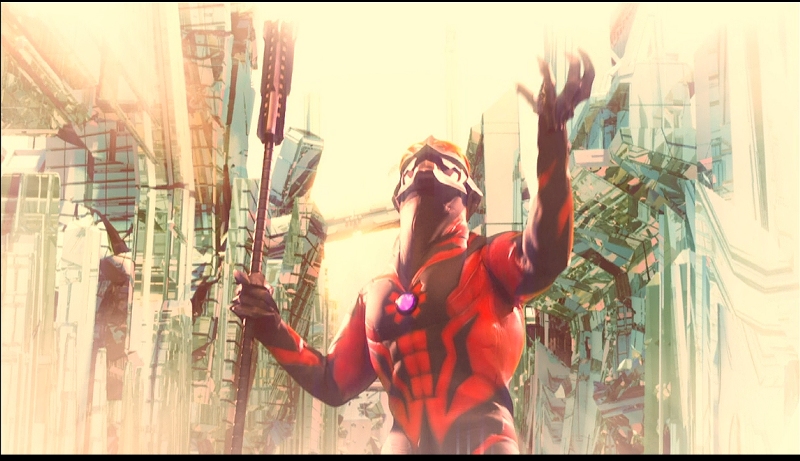
I could say this is a beautiful illustration of Venom or Carnage painted by Alex Ross. But it’s not. It’s just a screencap from one of the recent Ultraman movies. Hugely popular in Japan. What you see there is an actor in a suit.

A movie that is utterly ridiculous. They start fighting from the first minute and continue till the last, barely speaking a line of dialogue between one scene and the next. One hour and half in total. Of (extremely redundant) fighting.

It’s almost an anti-movie. The kind of stuff that is at the same time brilliant and atrocious. The whole movie takes place on CG backgrounds, so it’s all done in bluescreen. It’s not completely CG, the actors are real, only wearing costumes and 95% of the time expressionless masks. I mean, when you have a CG movie, like those made by Pixar, all the effort goes to build communicative expressions. Here instead the masks negate all form of expression from the only element that is not CG, so you have at best the posturing of trying to communicate something. Suits hiding real actors on top of fake backgrounds. There’s also something of Fritz Lang’s Metropolis since the staff that the bad guy wields makes weird piano notes when he fights.

The plot itself is a cliched hodgepodge of eastern and western plot patterns. The Ultramen are very similar to the Green Lanterns, surveying and policing the galaxy, defending the many planets from oversize dinosaur-like monsters. Their home planet risked to die after the sun exploded (like Superman), then compensated by the construction of an artificial sun that also turned all the population into masked super-heroes. A power that then lures those who are the most ambitious and want it all for themselves. The rest seems like a copy of Star Wars without plot, characters or setting (and budget). Just fights and “impressions”. And in between there’s also a father-son thing going on, with the son being exiled on another planet with a Yoda-like instructor in order to learn how to resist the lure of power and its responsibilities.

But as I said it has its charm and it should be seen, at least as a weird experiment. I had to research a bit, as the story connects here and there with other material. This is the most concise list of stuff available subtitled and directly connected material, leaving out the main series:

– Ultraman Mebius Side Story: Ghost Reverse (Part I&II) – Two half an hour special episodes that vaguely set-up the first movie
– Mega Monster Battle: Ultra Galaxy Legends – 96 minutes movie, the screenshot is taken from this
– Ultra Galaxy Side Story: Ultraman Zero Vs Darclops Zero (Part I&II) – Two half an hour special episodes setting up the sequel
– Ultraman Zero: The Revenge of Belial – 100 minutes sequel to Ultra Galaxy movie. This one is the one they say it’s good and that prompted me to watch from the start, hoping to find some trace of “plot”

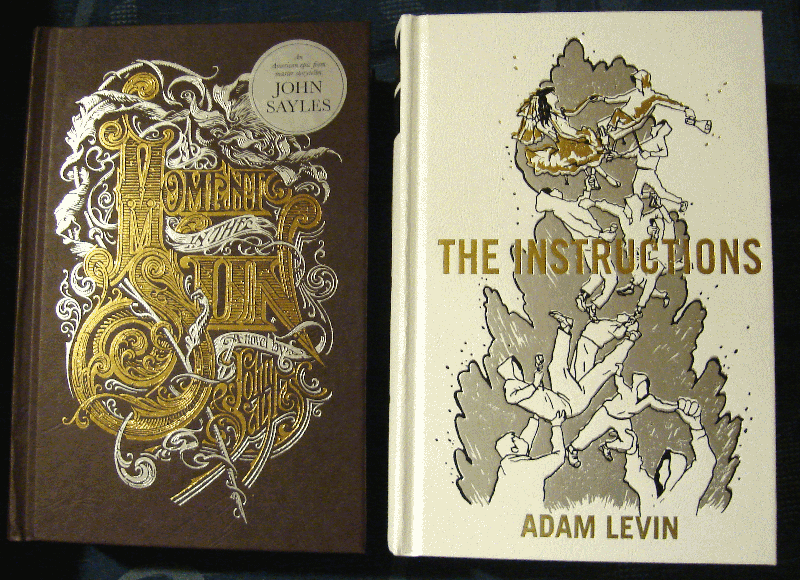
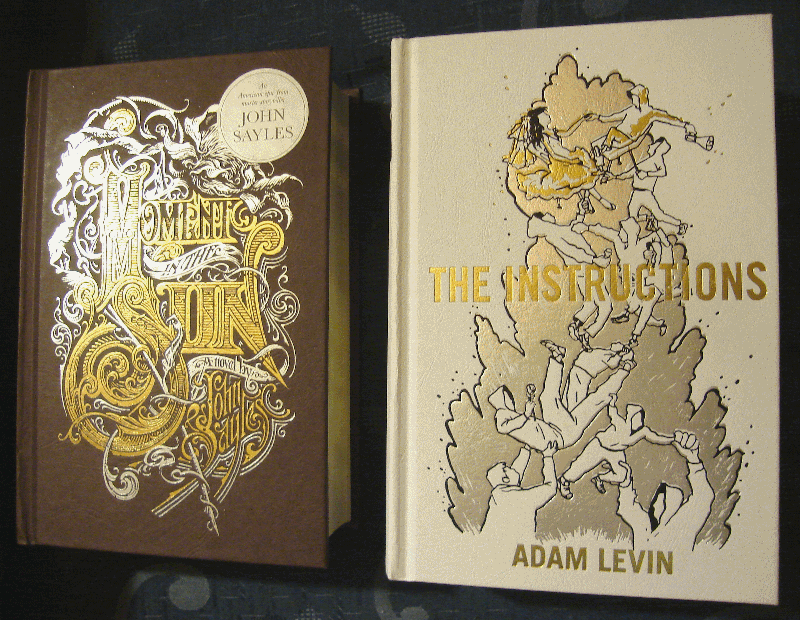
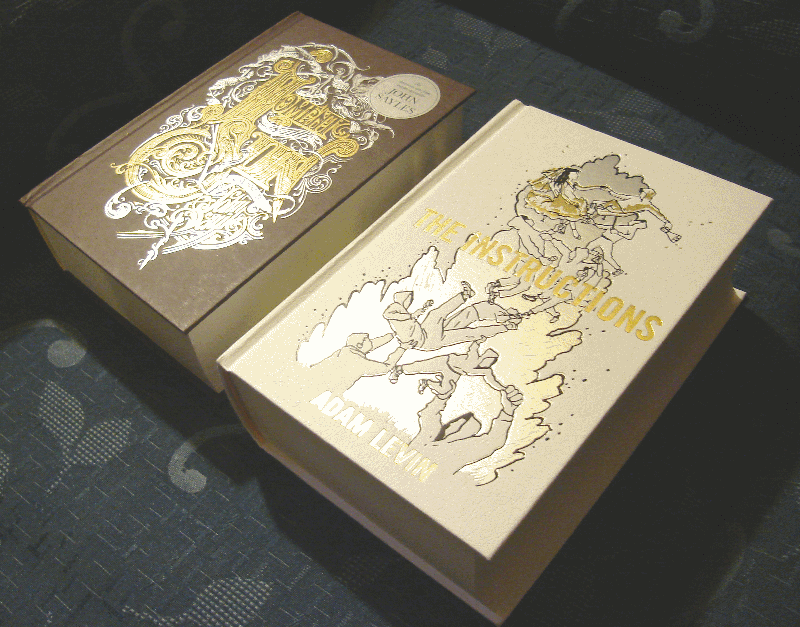
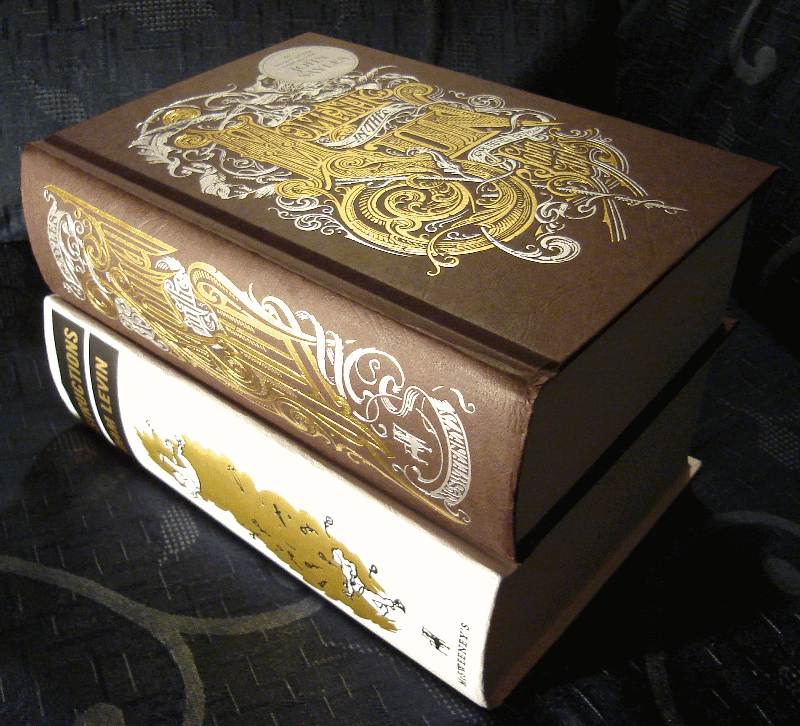
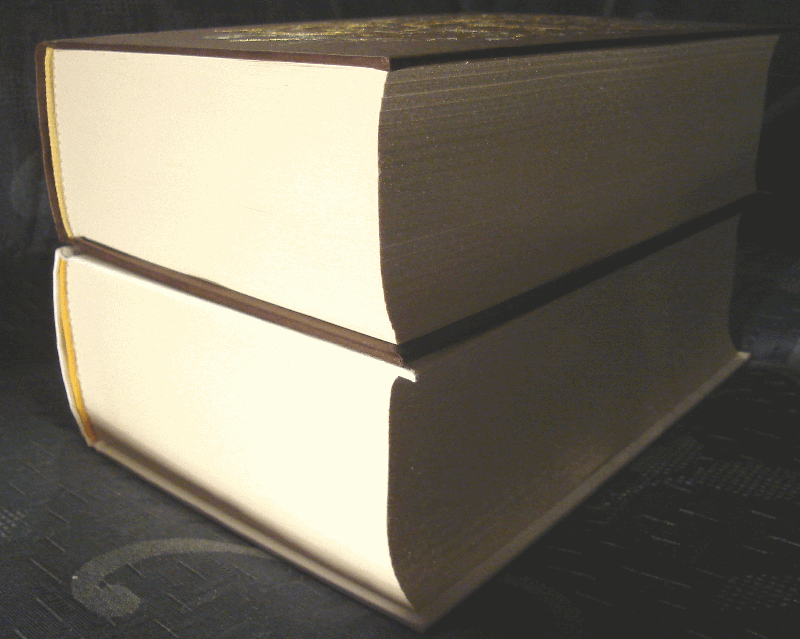
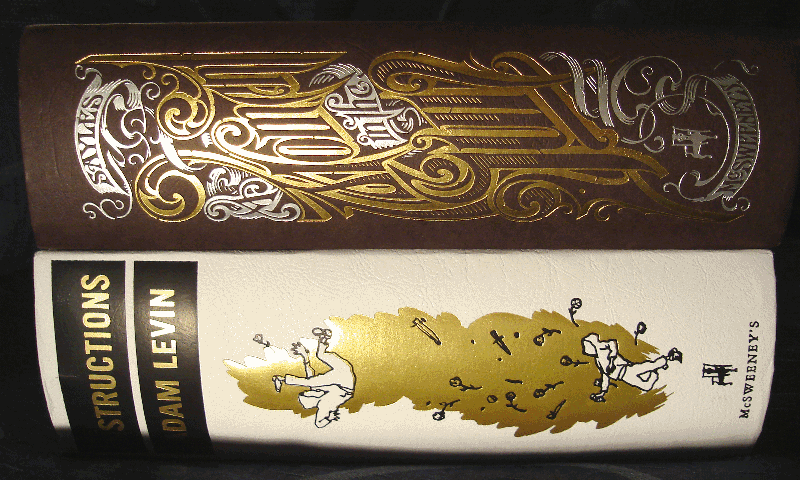
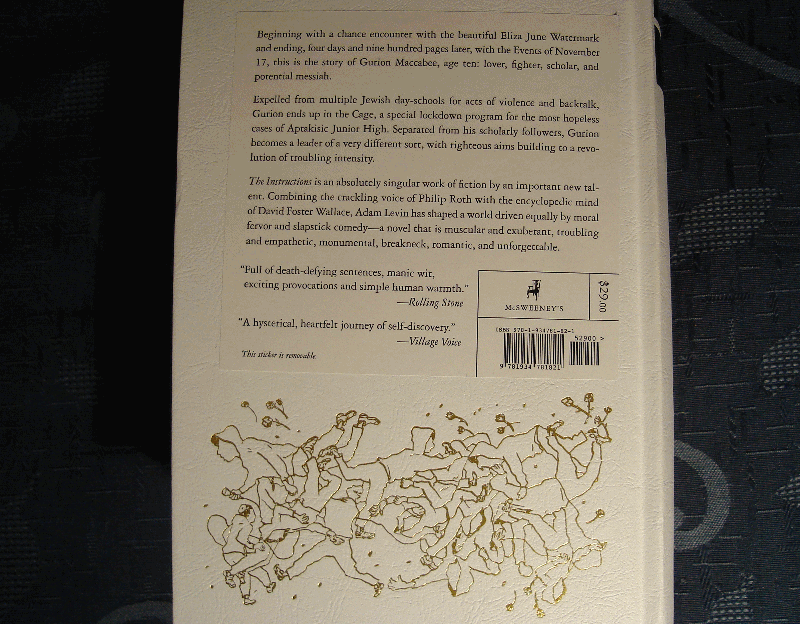
Here I serve some book porn. I finally received these two books today, two of the sexiest I ever purchased. The book, as an object, can have its charm too.

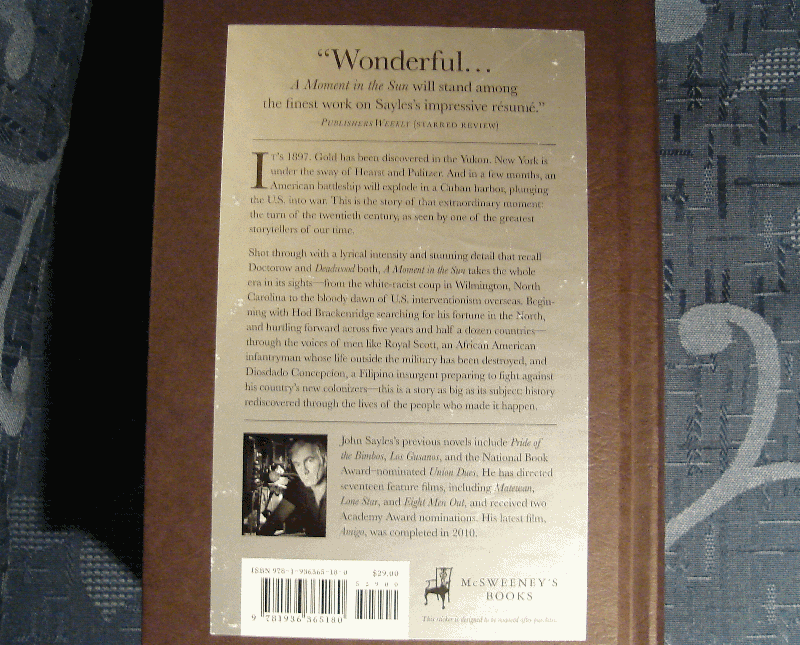
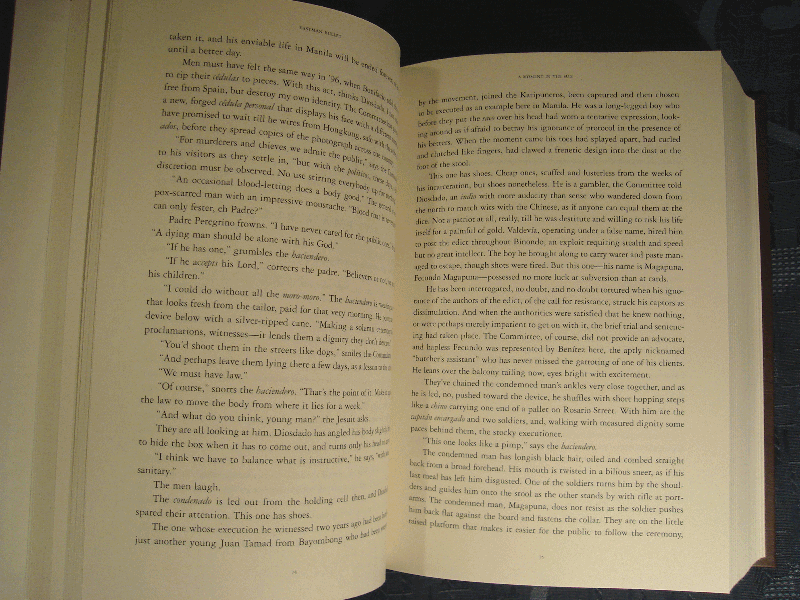
Two books coming from the same publisher (McSweeney’s) and relatively recent. THE INSTRUCTIONS by Adam Levin was November 2010, A Moment in the Sun by John Sayles was a month ago. Both are HUGE tomes, THE INSTRUCTION is slightly bigger at 1030 pages, and A Moment in the Sun is 960. Same number of lines on the page (38) but A Moment in the Sun has a very slightly smaller font.

Both books thankfully arrived in very good condition, though THE INSTRUCTION comes in fives different colors (or more) and I got this white copy that isn’t exactly my favorite pick.

It should be obvious that I have a peculiar love for books with a staggering number of pages and written tiny, and there are a number of motivations. The first is simple fascination that I got since I was a kid. Both Lord of the Rings and The Neverending Story in its own way gave me this fascination for something you could lose yourself in forever. Something that was never over and that kept charming you. The prototypical idea of “THE” Book, the definitive one, the one that could tell you everything that is worth knowing. Then there’s a fact that these huge books are achievements. A kind of monument to human intellect and culture. Like climbing the Everest, and reading it you get to share something of the achievement itself. A relevant accomplishment. Other books you can read and forget, but these huge books can haunt you, challenge you from their shelf, and be part of a significant chunk of your life.

Then there’s the fact that the number of books out there to read is truly infinite. So if I read something then I want that the writer gave to the book EVERYTHING HE HAD. Writing a book, or a series, has to be something necessary and ultimate. And huge books demand more from the reader as from the writer. They can’t be done on the sideline, they pretend a singular commitment (and need to provide equivalent reward).

Obviously the hugeness of a tome draws my attention, but I’m not buying and reading a book just because it’s huge, as I don’t do that just because I like a cover. The point is: I bought these two books here because I made some research before, and I expect these to be masterpieces. Nothing less. So, regardless of them being sexy or being long, you should be interesting because they are good stuff.

It may be interesting how I found them. I simply got to this blog post. A list of 10 doorstoppers, and a list of books that I at least know rather well if not read back to back. An outstanding list, actually. The last one, though, I had never heard. Not even a slight mention.

So I go and start doing my research. I found another blog, The Year of Difficult Reading, that is rather interesting in its own right and that got another picture of challenging (and significant) books. Or another that made fun at the hugeness of THE INSTRUCTIONS.

Along that I also read a number of glowing reviews and lots of comparisons with DFW’s Infinite Jest, my favorite book by far. So I got more and more interested and figured this wasn’t just a book that deserved attention, but something potentially great and memorable. Especially, I read that it’s not one of those long, slow and difficult books that have no point and are impossible to read and understand. It’s instead playful and lively, fun to read and keeping you turning the pages. Something readable in spite of its length and ambitious literary collocation.

I still only read a few pages but I definitely confirm all that. It plays a lot with language and reminds me closely of DFW. It actually gives me more nostalgia than anything. Makes you really miss Infinite Jest and feels like it’s only a desolate imitation. It has something of DFW style, but not the spark of pure genius. Yet, despite this “wannabe” intention it also seem to have its own qualities. The idea I get is that the writer is constantly one step ahead of the reader and second-guessing everything. The attention is very much on the reader instead of some obscure and unreachable literary intention. He anticipates your reactions and keeps this sense of self-awareness. It manages, at the same time, to be serious while not taking itself seriously at all. So it’s not a book arrogant and pompous, but one that plays self-consciously with itself and the reader. A lively, fun dialogue in its own right, and never going too far only to fail clumsily.

After I put the order for THE INSTRUCTIONS I also checked the book’s publisher and noticed another book of them. John Sayles is one of my favorite directors (and if you haven’t already, go see all his movies since they are all masterpieces). I saw most of his movies at an independent festival a few years ago and even saw him in person. Now this is an historical fiction which is not something that would make me purchase the book without knowing more, but I know what kind of stuff I can expect from John Sayles and so what I needed was confirmation that he was as good writer as he was as director. Not many reviews out there yet, since the book is recent, but all the comments I found were packed with praises, hinting that this book may be something memorable regardless of Sayle’s career.

Today I read an interview with John Sayles that again reinforced all my hopes for this book.

Now Sayles has unveiled his most ambitious project to date in any genre, A Moment In the Sun, a bloody, brilliant, nearly 1,000 page globetrotting epic set at the turn of the last century, a time not so different from our own, it turns out.

Had to keep quoting lines on Twitter because it was full of awesomeness. This is what I liked:

The Rumpus: Your new novel, A Moment in the Sun, is written in—I wouldn’t say English, exactly, because you’ve taken and twisted the language to make it your own. It reads like a tornado of voices.

John Sayles: Every character has their own language, voices and styles. There’s a chapter from the point of view of a correspondent, and it’s written like the correspondence of that time. I read a bunch of those guys, Richard Harding Davis, and picked up on their locutions, which aren’t locutions we use anymore.

Rumpus: You were channeling them?

Sayles: You get into it and pretty soon—when actors play a character on a TV show for a long time, they’ll just get the script back to the new writers and say, My guy does not talk like that, because they’ve internalized it. They know the vocabulary and the rhythm of that character, and that’s how I start writing with this—it’s a dialogue, how the character expresses themselves, so I can find out who they are.

[…]

It expanded, and I just felt while I was writing it that the book had gotten to a size—this happens with things when they get to be the size of Moby-Dick—where it’s not a tight little story anymore, and it’s never going to be a tight little story. This is a book you can walk around in.

Rumpus: So it’s about giving voice to the voiceless—

Sayles: Or just telling the story in a complex and mosaic kind of way and feeling like wait a minute, here’s a whole part of the story that’s not represented and I just at least want one window into it, just one little peak.

Rumpus: And that’s the importance of storytelling, finally, you mean? Whether it’s movies or books, that’s why we tell stories?

Sayles: The minute this turns into a novel and not a screenplay, a couple things happen. One, you can have many more points of view. This book would not make a movie, it’d make a fifty-part mini-series, maybe. But in the process you don’t have that time to structure peoples’ experience. It’s very important in a movie what follows what. This needs to happen and then this happens next. A good action movie is like a rollercoaster ride, whereas a novel like this a long journey down a river. There are some slow parts and some rapids and—oh, shit, here comes a waterfall.

The other thing that happens is that I could do anything in fiction I feel like if I do it well, if I make people think things, wonder about things, feel things. In a movie, you lose that interior monologue.

There’s a couple of reasons people tell stories. Traditional oral storytelling—and I got into this in The Secret of Roan Inish—is about passed on from generation to generation. Sometimes they’re cautionary tales, other times they’re about who we are. We tell the story over and over. I was raised Catholic. There are gospels and these are allegorical stories that tell you about your religion or what we as Catholics believe is our central story or our central being. Native Americans have these stories, the Irish have a lot of these stories. Here’s someone else’s story. Here’s somebody you will never meet—oh, how exotic. Here’s a bunch of stories about a bunch of guys who go and chase whales. And you know what’s amazing? As great an adventure the story is, there’s also some pretty heavy human stuff that you could apply to human beings in general when they get into a dark place. So then what fiction becomes is a way to understand the world and a way to understand other people, and maybe yourself but other people too, and in the end a lot of what I try to do in books and movies is take you into other people’s lives so you can get a sense of how they see the world.

McSweeney’s also put a “bonus” page with lots of pictures and notes that John Sayles used as documentation. It’s awesome stuff. (and nice pictures here as well)

These two books aren’t just two huge and competently published books that look so great on a shelf. But also something special and that would be precious even without awesome covers & packaging & pagecount. Quality stuff, the best around I’m aware of. Apexes of achievement in their own genre. Invaluable experiences.

And they are CHEAP. Amazon.com is selling both of them for half their price. So go and enjoy the privilege while you can:

– THE INSTRUCTIONS
– A moment in the Sun

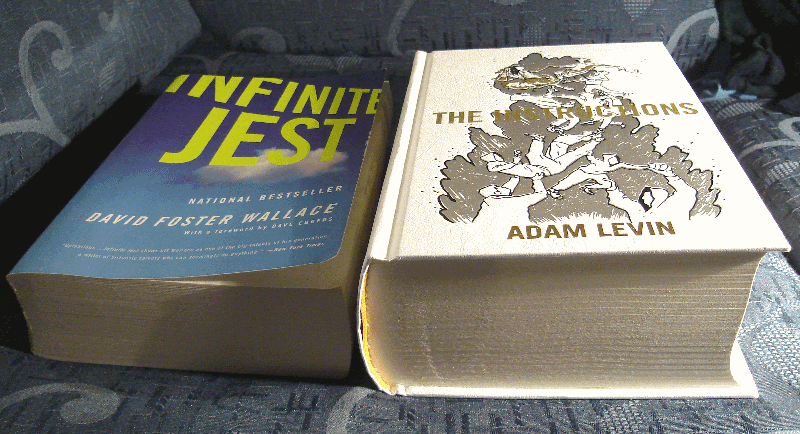
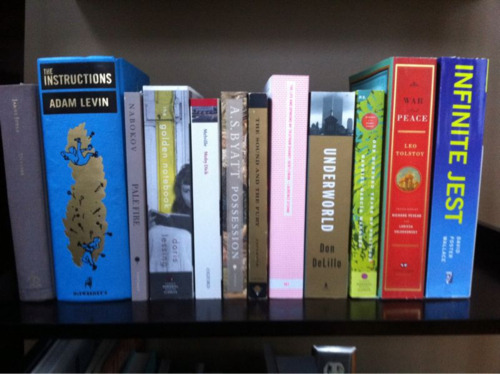
THE INSTRUCTIONS Vs Infinite Jest:

A random page from A Moment in the Sun:

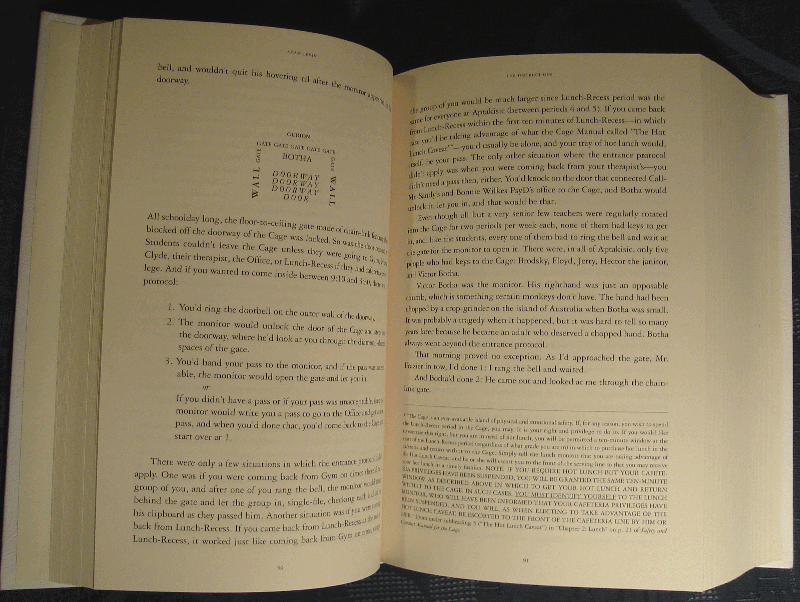
A page from THE INSTRUCTIONS, it plays a bit with the structure and presentation as you can see:

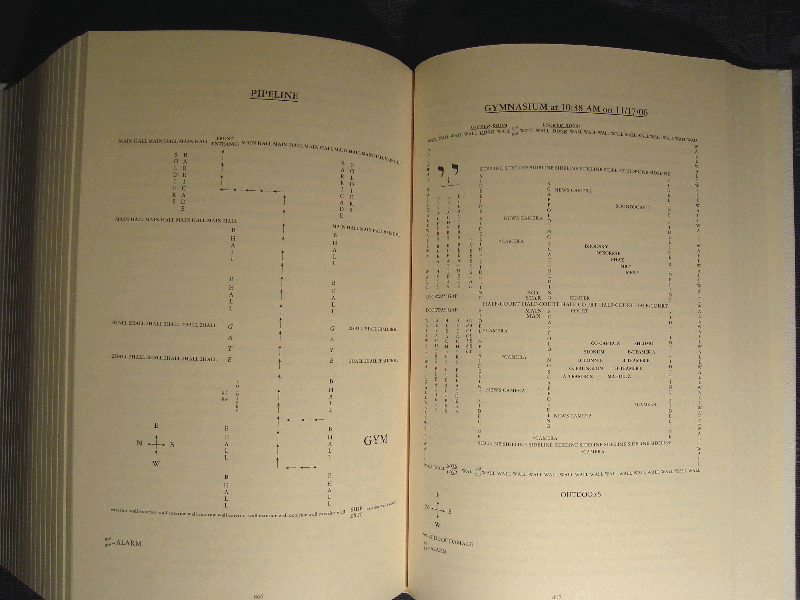
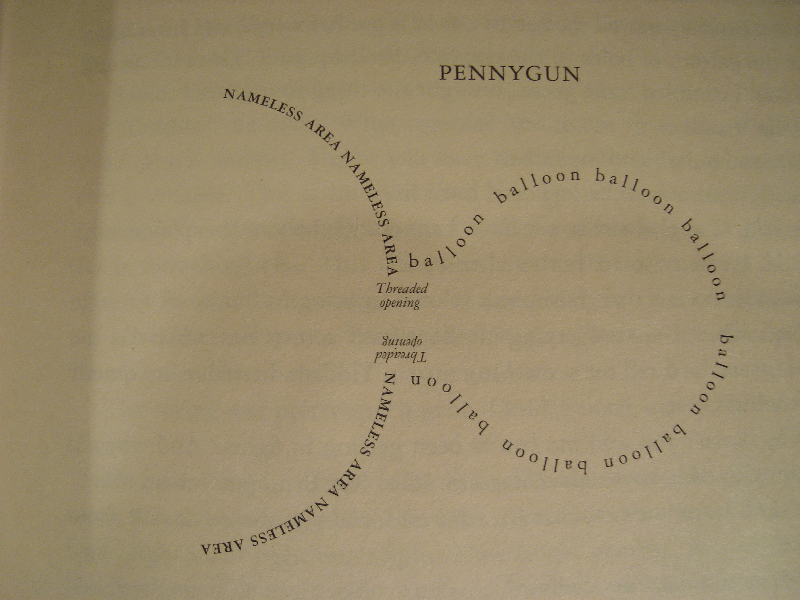
Sometimes there are also these maps made of words:

And other playful things in the same style:

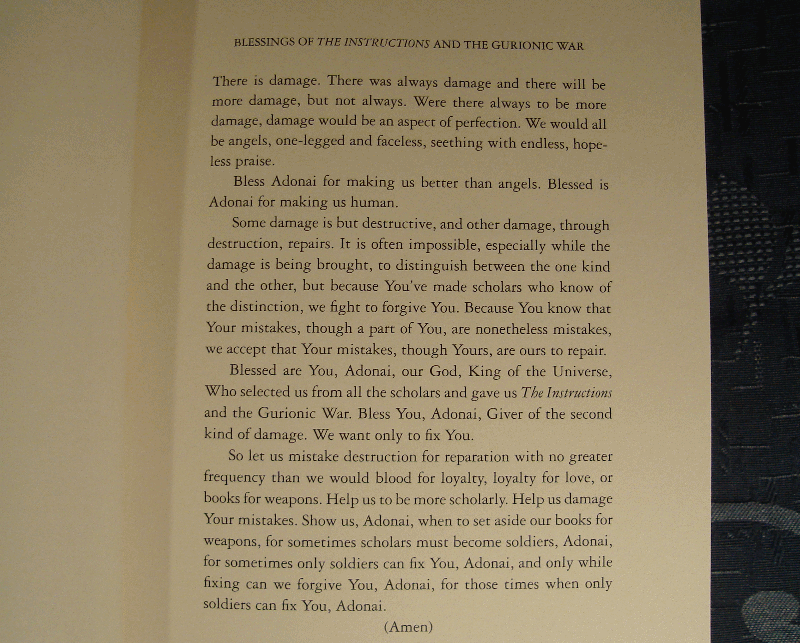
This is the “prayer” at the beginning of the book:

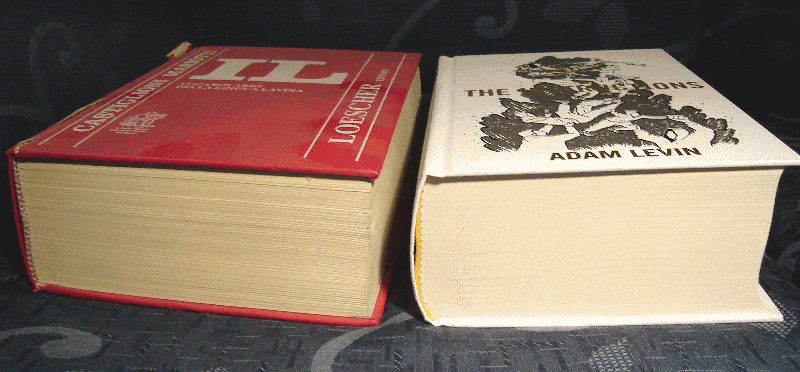
THE INSTRUCTIONS Vs old Latin dictionary: